The Galvanic Series in Action: Why Zinc Sacrifices Itself While Barrier Coatings Fail
-
Admin
-
July 1, 2026
-
Zinc
-
0 Comments
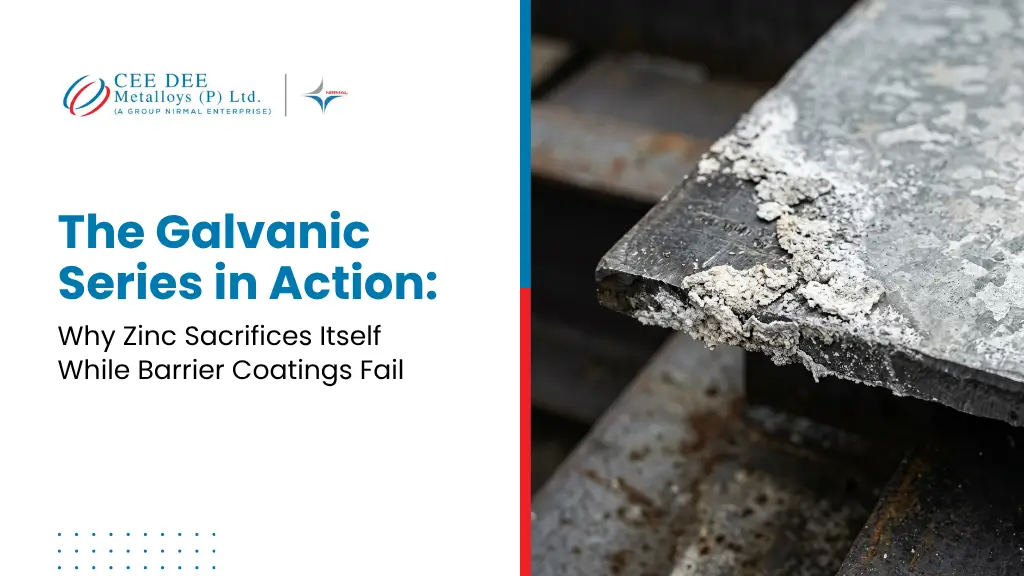
Every structural engineer, corrosion specialist, and fabricator making coating decisions for long life steel structures eventually confronts the same fundamental question: why does a zinc coating continue to protect steel long after it has been scratched, cut, or damaged, when an apparently intact paint or epoxy barrier fails from the inside out? The answer lies in the galvanic series, one …
Continue Reading
Calculating Deposition Efficiency: Reducing Material Waste in Zinc Arc Spraying
-
Admin
-
July 1, 2026
-
Zinc
-
0 Comments
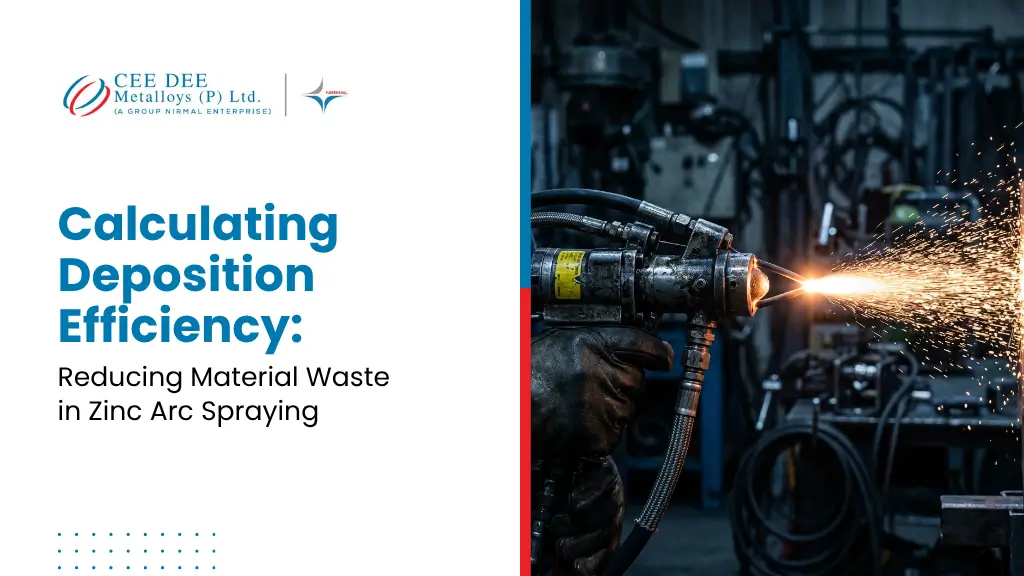
For any fabricator, EPC contractor, or galvanizing alternative shop running twin wire arc spray equipment, zinc wire is one of the largest recurring line items on a project budget. Yet a surprising number of metallizing operations never measure how much of that wire actually ends up as usable coating versus how much is lost as overspray, rebound, and oxidation fines. …
Continue Reading
Zinc Wire for Electromagnetic Shielding: Technical Parameters and Industry Applications
-
Admin
-
May 26, 2026
-
Zinc
-
0 Comments
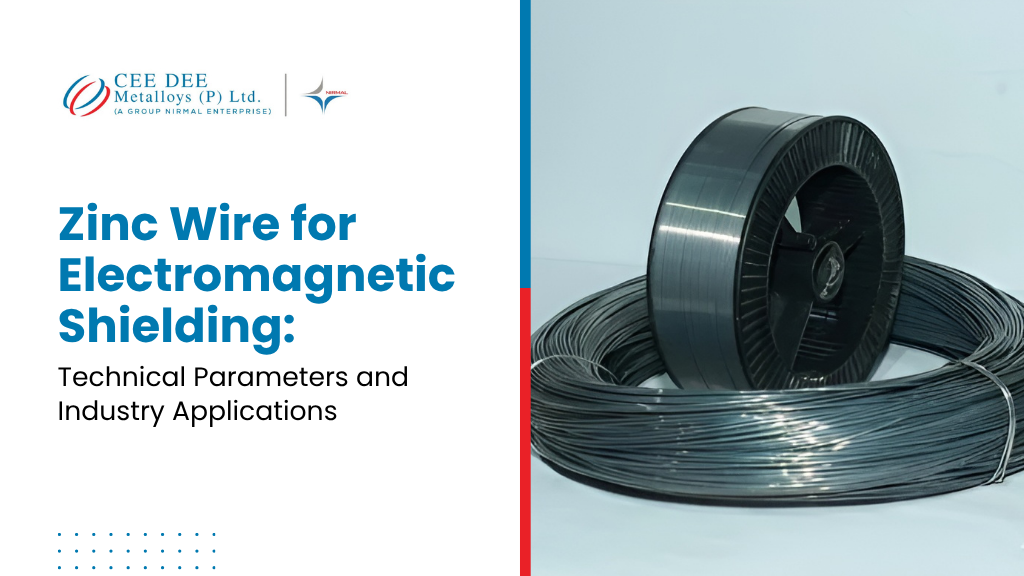
Key Highlights Thermally sprayed zinc creates a continuous conductive layer that attenuates electromagnetic waves through reflection, absorption, and multiple internal reflection mechanisms. Shielding effectiveness (SE) of 40-60 dB is achievable with 100-200 micrometre zinc coatings across 100 MHz to 1 GHz. Arc spray zinc coatings outperform flame spray for EMC applications due to lower porosity and higher coating density. 99.995% …
Continue Reading
Arc Spray vs Flame Spray: A Technical Comparison for Industrial Zinc Coating Applications
-
Admin
-
May 26, 2026
-
Zinc
-
0 Comments
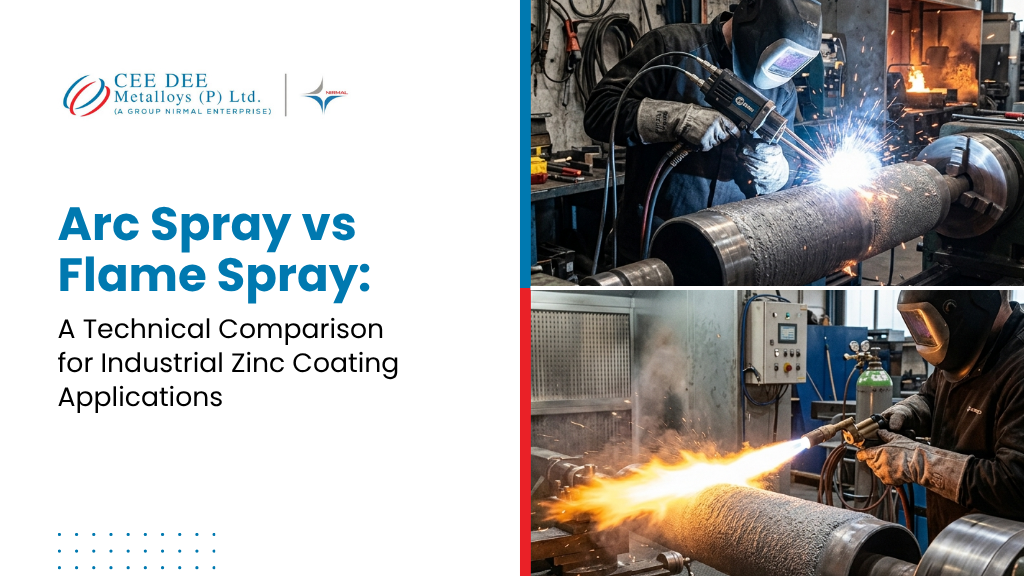
Key Highlights Arc spray delivers higher coating quality, lower porosity, and better adhesion than flame spray for zinc and zinc-aluminium wire. Flame spray offers lower equipment cost, simpler setup, and greater suitability for remote or low-volume applications. Deposition efficiency of arc spray (70-85%) is significantly higher than flame spray (50-65%), reducing material waste. Both processes are compatible with zinc wire …
Continue Reading
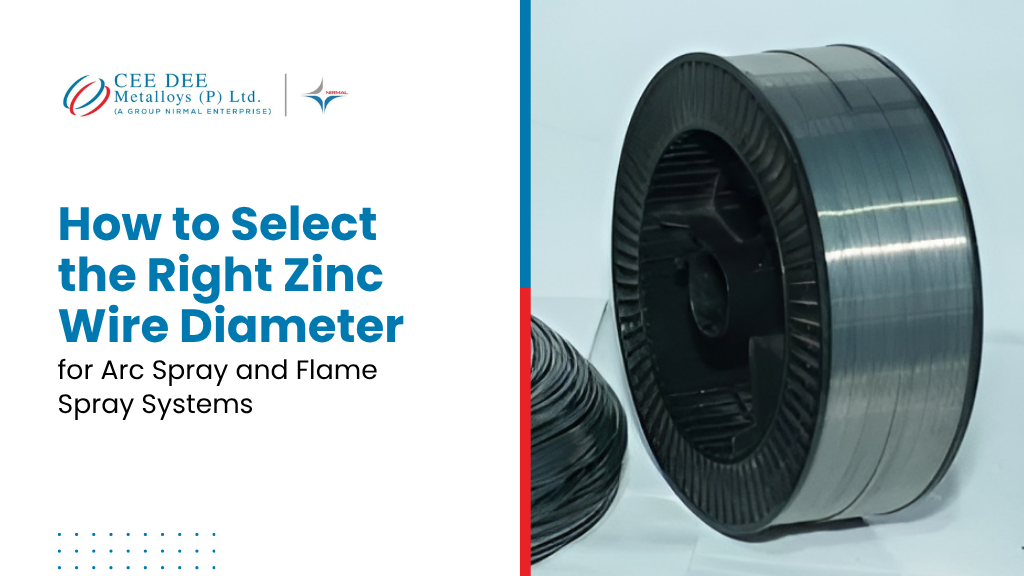
How to Select the Right Zinc Wire Diameter for Arc Spray and Flame Spray Systems
-
Admin
-
May 26, 2026
-
Zinc
-
0 Comments
Key Highlights 3.17mm (1/8 inch) is the dominant zinc wire diameter for both arc spray and flame spray and is compatible with most commercial gun models. Wire diameter directly affects deposition rate, coating surface roughness, and droplet size, all of which influence final coating quality. Equipment compatibility is the primary constraint: always match wire diameter to the gun manufacturer’s specification. …
Continue Reading
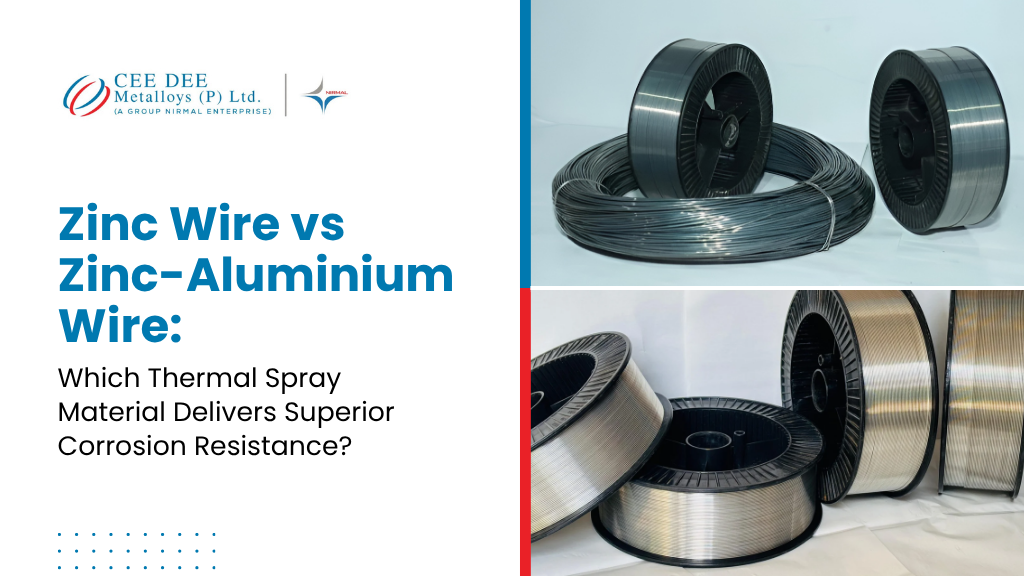
Zinc Wire vs Zinc-Aluminium Wire: Which Thermal Spray Material Delivers Superior Corrosion Resistance?
-
Admin
-
May 26, 2026
-
Zinc
-
0 Comments
Key Highlights Zinc-aluminium wire (ZnAl15) delivers 2-3x the corrosion service life of pure zinc wire in C4-C5 environments per ISO 12944. Pure zinc wire remains the preferred choice for sacrificial galvanic protection of rebar and mild inland exposures. Coating microstructure differs fundamentally: zinc produces a lamellar oxide structure while ZnAl forms a dense mixed oxide passive layer. Both alloys are …
Continue Reading
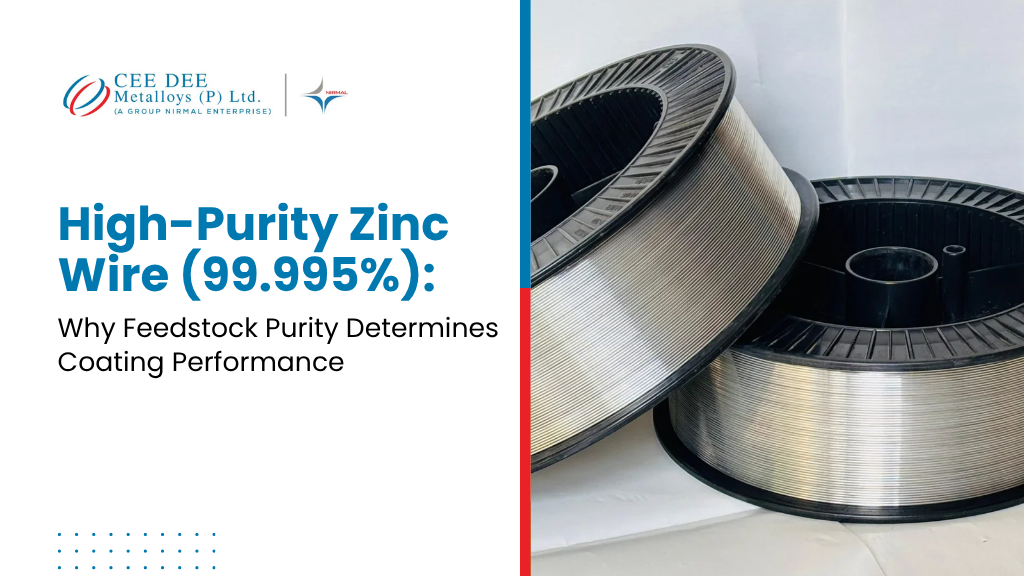
High-Purity Zinc Wire (99.995%): Why Feedstock Purity Determines Coating Performance
-
Admin
-
May 26, 2026
-
Zinc
-
0 Comments
Key Highlights 99.995% purity (Special High Grade) is the internationally recognised minimum standard for zinc wire used in structural thermal spray corrosion protection. Lead contamination above 0.003% in zinc feedstock creates brittle grain boundary phases that reduce coating cohesive strength and accelerate corrosion. Cadmium, iron, and copper are the other critical impurity elements, each with specific effects on coating microstructure …
Continue Reading