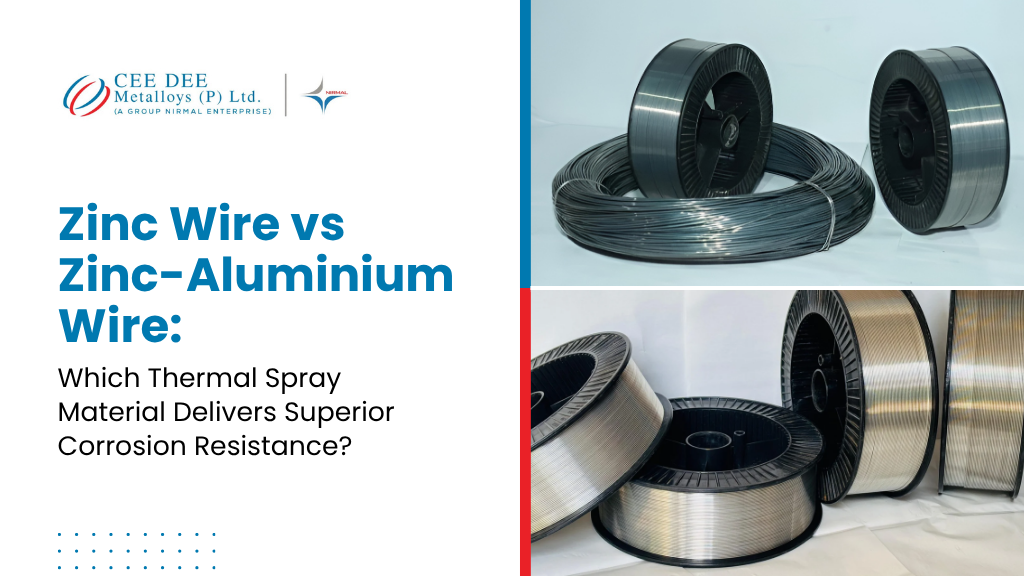
- Zinc-aluminium wire (ZnAl15) delivers 2-3x the corrosion service life of pure zinc wire in C4-C5 environments per ISO 12944.
- Pure zinc wire remains the preferred choice for sacrificial galvanic protection of rebar and mild inland exposures.
- Coating microstructure differs fundamentally: zinc produces a lamellar oxide structure while ZnAl forms a dense mixed oxide passive layer.
- Both alloys are compatible with arc spray and flame spray equipment, but process parameters must be adjusted for zinc-aluminium.
- ISO 2063 and EN ISO 14713 govern minimum coating thickness and sealant requirements for both feedstock types.
- Whole-life cost analysis consistently favours zinc-aluminium wire in marine, offshore, and aggressive industrial environments.
- What Is Zinc Wire Thermal Spray?
- What Is Zinc-Aluminium Wire?
- Corrosion Resistance Mechanisms Compared
- Coating Microstructure and Adhesion
- Industry Applications: Which Wire for Which Job?
- Commercial Spray Parameters and Process Compatibility
- Niche and Specialty Applications
- How to Select the Right Wire: A Decision Framework
- Performance Standards and Testing Protocols
- CeeDee Metalloys Serves Customers Across India
- Related Reading
- Frequently Asked Questions
Choosing between zinc wire and zinc-aluminium wire is one of the most consequential decisions a corrosion engineer or procurement manager will make when specifying a thermal spray coating system. Both materials protect steel through electrochemical sacrificial action, yet they differ substantially in alloy chemistry, coating microstructure, long-term corrosion resistance, and total cost of ownership. This guide cuts through the confusion by examining both materials from the metallurgical level up to practical jobsite selection.
CeeDee Metalloys manufactures and supplies both zinc wire and zinc-aluminium wire to industries across India and international markets, and our technical team works closely with engineers at the specification stage to ensure the right feedstock is matched to each project’s environment, service life requirement, and budget. Understanding the fundamental differences between these two materials will help you make a confident, cost-effective choice.
1. What Is Zinc Wire Thermal Spray?
Thermal spray zinc wire refers to a continuous feed of metallic zinc with a purity of 99.99% or higher that is melted in an arc spray or flame spray gun and propelled at high velocity onto a prepared steel substrate. The resulting coating is a metallurgically bonded, porous layer of overlapping metallic splats that adheres mechanically to the blasted surface anchor profile.
Pure zinc coatings protect steel primarily through galvanic (sacrificial) action. Because zinc sits below iron in the electrochemical series, it preferentially corrodes in the presence of an electrolyte, donating electrons to the steel and preventing rust even at pinholes, holidays, or mechanical damage sites. This sacrificial mechanism is particularly valuable in aggressive chloride-rich environments.
Grades and Purity Levels
Industrial thermal spray zinc wire is available in several purity grades. The dominant specification for corrosion protection is Special High Grade (SHG) zinc at 99.995% purity, which is the feedstock grade used by CeeDee Metalloys zinc wire. Lower purity grades may introduce lead or cadmium contaminants that impair coating performance and create environmental compliance risks.
Always request a material test report (MTR) confirming feedstock purity to ISO 752 or ASTM B6 when procuring zinc wire for structural corrosion protection. Impurities above 0.003% lead can significantly accelerate coating degradation in salt-spray testing.
2. What Is Zinc-Aluminium Wire?
Zinc-aluminium wire is a thermally sprayed alloy feedstock containing zinc as the majority phase combined with aluminium, typically in compositions of ZnAl4 (4% aluminium), ZnAl15 (15% aluminium), or ZnAl85/15 eutectic alloy. The 15% aluminium alloy is the most widely used composition for structural steel protection and is sometimes referred to internationally as Zn15Al or ZnAl thermal spray wire.
The addition of aluminium transforms the coating from a purely sacrificial system into a dual-action protection system. Aluminium contributes a highly stable, tightly adherent Al2O3 passive oxide layer within the coating matrix, which slows the rate at which the zinc phase is consumed and dramatically extends service life compared with pure zinc coatings of the same thickness.
History and Development
The corrosion benefits of zinc-aluminium alloys have been understood since the 1970s, when research commissioned by the American Welding Society and the Zinc Institute first quantified the service life advantage of ZnAl coatings over pure zinc in coastal marine environments. Learn more about the history of ZnAl wires and the evolution of metallizing technology on the CeeDee Metalloys blog.
3. Corrosion Resistance Mechanisms Compared
The corrosion protection delivered by thermally sprayed zinc and zinc-aluminium coatings operates through two overlapping mechanisms: barrier protection and galvanic protection. Understanding how each mechanism contributes to the total protection system is essential for accurate service life prediction.
Barrier Protection
Both zinc and zinc-aluminium coatings form a physical barrier between the steel substrate and the corrosive environment. The quality of this barrier depends on coating porosity, thickness, and the nature of the corrosion products that form on the surface over time. Zinc corrosion products (zinc hydroxychloride, zinc carbonate) are relatively soluble in aggressive environments, providing limited long-term barrier benefit. In contrast, the aluminium oxide component in zinc-aluminium coatings is nearly insoluble and forms a durable secondary barrier within the coating matrix, substantially reducing electrolyte ingress.
Galvanic Protection
Both coatings are anodic to steel, meaning they will sacrificially corrode to protect exposed steel at holidays and damage sites. The galvanic driving force is slightly lower for zinc-aluminium alloys than for pure zinc, but because the zinc-aluminium coating is consumed more slowly, the duration of galvanic protection far exceeds that of pure zinc coatings at equivalent thickness.
4. Coating Microstructure and Adhesion
The microstructure of a thermally sprayed coating is largely determined by the feedstock alloy chemistry, the spray process parameters, and the substrate surface condition. Zinc and zinc-aluminium coatings exhibit distinctly different microstructures that explain much of their differing corrosion performance.
Pure Zinc Coating Microstructure
Pure zinc thermal spray coatings consist of overlapping zinc splats with inter-splat oxide layers of ZnO. The coating is relatively ductile and soft, with a Vickers hardness of approximately 40-60 HV. Porosity levels typically range from 8-15% depending on spray parameters. The high ductility means the coating can accommodate substrate flexing without cracking, which is advantageous in applications involving cyclic mechanical loading.
Zinc-Aluminium Coating Microstructure
ZnAl coatings have a more complex microstructure featuring zinc-rich and aluminium-rich phases dispersed through the splat matrix, with Al2O3 and ZnO inter-splat oxide layers. Porosity is typically lower at 5-10%, and hardness is higher at 60-90 HV. The aluminium-rich phases act as barriers to electrolyte penetration, while the zinc-rich phases maintain galvanic activity. This dual-phase structure is the primary reason for the enhanced corrosion resistance of zinc-aluminium versus pure zinc coatings.
5. Industry Applications: Which Wire for Which Job?
The choice between zinc wire and zinc-aluminium wire is not a simple question of which is better in an absolute sense. Each alloy type has environments and applications where it represents the optimal technical and economic solution.
Where Pure Zinc Wire Excels
Pure zinc wire remains the preferred feedstock for metallizing structural steel in corrosivity categories C1 through C3 (rural, urban, and mildly coastal environments). It is also the specification material for coating rebar in reinforced concrete, where maximum galvanic sacrificial activity is needed to protect steel through concrete cover. The applications include bridges in inland locations, storage tanks, agricultural equipment, and industrial structures away from the coast.
Where Zinc-Aluminium Wire Excels
For offshore oil platforms, coastal bridges, port infrastructure, marine vessels, and industrial structures in C4-C5 environments (high chloride or high industrial pollution), zinc-aluminium wire delivers substantially better value. The initial feedstock premium of 15-25% is recovered within 3-5 years through reduced recoating cycles and lower maintenance cost. The benefits of zinc-aluminium wire in these environments are well documented in EN ISO 14713 and decades of field performance data from North Sea and Gulf of Mexico offshore structures.
Need Technical Guidance on Feedstock Selection?
CeeDee Metalloys engineers provide no-cost application consultations for project specification. Tell us your environment, structure type, and target service life and we will recommend the optimal wire grade, thickness, and sealant system.
Request a Free Technical Consultation6. Commercial Spray Parameters and Process Compatibility
Both zinc wire and zinc-aluminium wire can be processed using arc spray and flame spray equipment. However, each alloy type has distinct spray parameter requirements that affect coating quality and productivity.
Arc Spray Parameters
In arc spray, an electric arc is struck between two continuously fed wires, melting the tips and atomising the molten material with a compressed air stream. Pure zinc wire is highly compatible with arc spray, with a typical spray voltage of 18-24V and current of 150-250A depending on wire diameter. Zinc-aluminium wire requires slightly higher voltage settings (22-28V) to ensure complete melting of the aluminium-rich phase. Stand-off distance of 150-200mm is standard for both alloys. The zinc metallizing spray machine from CeeDee Metalloys is engineered to handle both feedstock types with consistent arc stability.
Flame Spray Parameters
Flame spray processes use oxy-fuel combustion to melt the wire feedstock. Both zinc and zinc-aluminium wires are compatible with standard oxy-acetylene and oxy-propane flame spray guns. Because the melting point of aluminium (660 degrees C) is higher than zinc (419 degrees C), zinc-aluminium alloy wire requires more careful flame adjustment to ensure both phases are fully melted before impact. Undertreated zinc-aluminium coatings show incompletely melted aluminium particles that reduce coating density and corrosion performance.
7. Niche and Specialty Applications
Electromagnetic Shielding
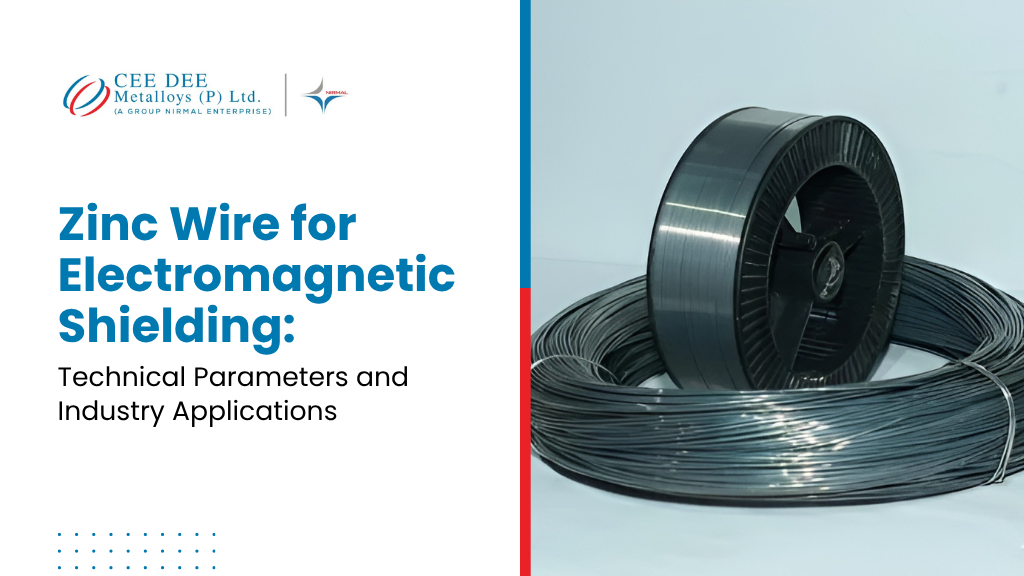
Both zinc wire and zinc-aluminium wire coatings are used for electromagnetic shielding in electronic enclosures, power infrastructure, and MRI facility construction. Zinc-aluminium coatings offer marginally better shielding effectiveness at frequencies above 1 GHz due to the higher coating density and lower porosity. Learn more about the use of zinc in electronics.
Renewable Energy Infrastructure
Wind turbine towers, solar mounting structures, and hydroelectric penstock pipes all benefit from thermal spray zinc coatings as an alternative to hot-dip galvanising for large complex structures. Zinc-aluminium wire is increasingly specified for offshore wind turbine foundations operating in splash zones.
Bio-Zinc and Agricultural Applications
For structures in contact with soil or used in agricultural settings, bio-zinc formulations provide corrosion protection while meeting regulatory requirements for zinc content in soil-contact applications. Pure zinc wire is the preferred feedstock for bio-zinc coating applications.
8. How to Select the Right Wire: A Decision Framework
The following comparison table summarises the key differentiators between zinc wire and zinc-aluminium wire across the parameters most relevant to a specification engineer.
| Parameter | Pure Zinc Wire (99.995%) | Zinc-Aluminium Wire (ZnAl15) |
|---|---|---|
| Primary protection mechanism | Galvanic (sacrificial) | Barrier + Galvanic (dual action) |
| Salt spray life (200 micrometres) | 2,500-3,500 hours | 6,000-8,000 hours |
| Corrosivity category (ISO 12944) | C1-C3 optimal | C3-C5 optimal |
| Coating hardness (HV) | 40-60 | 60-90 |
| Typical porosity | 8-15% | 5-10% |
| Feedstock cost premium | Baseline | 15-25% higher |
| Arc spray compatible | Yes | Yes (adjust voltage) |
| Flame spray compatible | Yes | Yes (adjust flame) |
| Governing standard | ISO 2063, ASTM B6 | ISO 2063, EN ISO 14713 |
| Recommended for rebar coating | Yes | Less common |
| Recommended for offshore | Not preferred | Yes |
Decision Flowchart Logic
If your project environment is C1-C3 and the primary protection mechanism needed is galvanic sacrificial action, pure zinc wire is the technically and economically optimal choice. If your project environment is C4-C5, involves chloride exposure, or requires a service life exceeding 25 years between major maintenance interventions, specify zinc-aluminium wire and include a penetrating inorganic sealer in the coating system. When in doubt, contact the CeeDee Metalloys quality assurance team for a project-specific recommendation supported by test data.
9. Performance Standards and Testing Protocols
Thermal spray zinc and zinc-aluminium coatings are governed by a well-established body of international standards that specify minimum coating thickness, surface preparation requirements, inspection protocols, and sealant recommendations.
Key Standards
ISO 2063-1 and ISO 2063-2 specify zinc, aluminium, and their alloy thermal spray coatings for iron and steel. EN ISO 14713-1 provides guidelines for the selection of corrosion protection systems for steel and iron. SSPC-CS 23.00 and AWS C2.18 are the principal North American references. ISO 12944 categorises environmental corrosivity and specifies minimum coating performance requirements per category.
Inspection and Testing
Coating thickness is measured using magnetic induction gauges per ISO 2808 or ASTM E376. Adhesion is tested by pull-off testing per ISO 4624, with a minimum acceptable value of 3.5 MPa for structural coatings. Porosity assessment is performed on metallographic cross-sections. Salt spray corrosion testing per ASTM B117 and ISO 9227 is used for qualification testing of new coating systems.
External reference: The ISO 2063 standard family is the definitive international reference for thermal spray zinc and zinc-aluminium coating specifications. The Society for Protective Coatings (SSPC) publishes guidance on surface preparation and inspection protocols. The NACE International body of standards is widely referenced for offshore and marine corrosion protection specifications. The International Zinc Association maintains a library of field performance data for zinc-based coating systems. The TWI (The Welding Institute) publishes research on thermal spray process optimisation for corrosion applications.
10. Performance Optimisation and Best Practices
Regardless of which feedstock is selected, the long-term corrosion resistance of a thermally sprayed coating system depends heavily on the quality of surface preparation, spray application, and post-treatment.
Surface Preparation
A minimum Sa 2.5 blast-cleaned surface per ISO 8501-1 with an anchor profile of 50-75 micrometres Rz is mandatory for both zinc and zinc-aluminium coatings. Contamination with oil, chlorides, or moisture at the time of spraying will cause catastrophic adhesion failure regardless of feedstock quality. The window between blast cleaning and thermal spray application should not exceed 4 hours in humid conditions.
Sealing
Penetrating sealants reduce coating porosity, improve corrosion performance, and extend service life by 30-50%. Inorganic zinc silicate sealers and low-viscosity epoxy sealers are the most commonly specified systems for both zinc and zinc-aluminium coatings. Sealing is mandatory under ISO 2063 for C4-C5 environments and strongly recommended for C3.
Quality Control
Continuous monitoring of feedstock purity, spray parameters, coating thickness, and adhesion throughout the application process is the only reliable way to ensure consistent corrosion performance. The quality assurance programme at CeeDee Metalloys includes feedstock certification, in-process monitoring, and final inspection documentation for all supply contracts.
Key Takeaways
- Zinc wire provides cost-effective galvanic corrosion protection for C1-C3 environments and rebar applications.
- Zinc-aluminium wire delivers 2-3x the service life of pure zinc in C4-C5 environments through its dual barrier-plus-galvanic protection mechanism.
- Coating microstructure differs fundamentally, with ZnAl coatings showing lower porosity and higher hardness.
- Both feedstock types are compatible with arc spray and flame spray equipment, subject to parameter adjustment.
- Whole-life cost calculations consistently favour zinc-aluminium wire in marine and aggressive industrial environments despite higher feedstock cost.
- Surface preparation, application parameters, and sealing quality determine final coating performance as much as feedstock alloy chemistry.
- Always specify feedstock to ISO 2063 grade standards and require material test reports from your supplier.
11. CeeDee Metalloys Serves Customers Across India
12. Related Reading
Frequently Asked Questions
What is the main difference between zinc wire and zinc-aluminium wire for thermal spray?
Pure zinc wire produces a softer, more ductile coating that offers good galvanic protection through sacrificial action. Zinc-aluminium wire (typically 85% Zn / 15% Al or ZnAl4) produces a harder, denser coating with a more complex passive oxide layer that provides both barrier and galvanic protection, resulting in two to three times the service life in aggressive marine or chemical environments.
Is zinc-aluminium wire always better than pure zinc wire?
Not always. Pure zinc wire is preferred for applications requiring maximum galvanic sacrificial action, such as coating rebar in concrete or structures in mildly aggressive inland environments. Zinc-aluminium wire is the superior choice for severe marine, offshore, and industrial environments where extended service life justifies the higher feedstock cost.
Which standard governs zinc and zinc-aluminium thermal spray coatings?
The primary standards are ISO 2063 (Thermal spraying of zinc, aluminium and their alloys), EN ISO 14713 (Guidelines and recommendations for the protection against corrosion of iron and steel), and SSPC-CS 23.00 for North American projects. AWS C2.18 and BS EN 22063 also apply in specific sectors.
What coating thickness is recommended for marine offshore applications?
For marine offshore and splash-zone environments, ISO 12944 and BS 5493 recommend a minimum dry film thickness of 200 micrometres for zinc-aluminium coatings. In fully immersed environments, thicknesses of 250-300 micrometres are common, typically sealed with an inorganic or epoxy sealant.
Can zinc-aluminium wire be used with a standard flame spray gun?
Yes. Zinc-aluminium wire is compatible with both arc spray and flame spray equipment. However, the alloy composition means the melting characteristics differ slightly from pure zinc wire, so operators may need to adjust gas pressure and stand-off distance. Always consult the equipment manufacturer and feedstock supplier for parameter recommendations. CeeDee Metalloys provides spray parameter guidance with every feedstock order.
How does surface preparation affect corrosion resistance of thermally sprayed coatings?
Surface preparation is arguably the single biggest factor in coating performance. Both zinc and zinc-aluminium coatings require a minimum Sa 2.5 blast-cleaned surface with an anchor profile of 50-100 micrometres Rz. Poor surface preparation causes adhesion failure at the substrate interface long before the coating itself is consumed.
What is the typical cost difference between zinc wire and zinc-aluminium wire feedstock?
Zinc-aluminium wire typically costs 15-25% more per kilogram than high-purity zinc wire due to the alloying process and stricter composition tolerances. However, when service life extension of 2-3x is factored into whole-life cost calculations, zinc-aluminium wire almost always delivers a lower cost per year of protection in medium-to-high corrosivity environments.
Does aluminium content affect the coating colour or appearance?
Yes. Pure zinc coatings are typically a bright silver-grey that oxidises to a matte grey over time. Zinc-aluminium coatings tend to have a slightly more matte appearance from the outset due to the aluminium oxide component. Both coatings accept topcoats or sealants without issue and can be painted over once the coating surface has been lightly abraded or primed.