Key Highlights
- Zinc aluminium alloy wire (Zn-15Al) delivers two to four times better corrosion resistance than pure zinc wire in marine and industrial environments.
- The alloy provides both galvanic protection from zinc and enhanced barrier protection through aluminium oxide formation.
- Zn-Al coatings are the preferred specification for bridges, offshore platforms, wind turbines, and marine structures.
- Compatible with standard arc spray equipment used throughout the thermal spray metallizing industry.
- CeeDee Metalloys supplies zinc aluminium wire across India from manufacturing facilities in Gujarat and distribution points nationwide.
- Service life of 40 to 80 years is achievable in moderate environments with correctly applied Zn-15Al coatings.
In This Article
When structural engineers and corrosion protection specialists are specifying long-term coatings for critical infrastructure in aggressive environments, the conversation increasingly centres on zinc aluminium alloy wire. The combination of zinc’s proven galvanic protection mechanism with aluminium’s exceptional barrier properties has produced a thermal spray feedstock material that outperforms pure zinc wire in virtually every demanding corrosion scenario.CeeDee Metalloys manufactures and supplies zinc aluminium wire alongside a full range of zinc wire, tin-zinc wire, and zinc metallizing spray machines. With deep expertise in corrosion protection consumables and a strong commitment to quality assurance, CeeDee Metalloys supports coating contractors and asset owners across India in selecting and applying the right alloy system for every application.- What Is Zinc Aluminium Wire?
- How Zinc Aluminium Wire Protects Metal
- Types and Alloy Grades of Zinc Aluminium Wire
- Target Applications for Metal Protection
- Industry Applications
- Commercial and Infrastructure Uses
- Speciality and Niche Applications
- How to Choose the Right Zn-Al Wire
- Performance, Maintenance, and Best Practices
- CeeDee Metalloys Serves Customers Across India
- Related Reading
- Frequently Asked Questions
1. What Is Zinc Aluminium Wire?
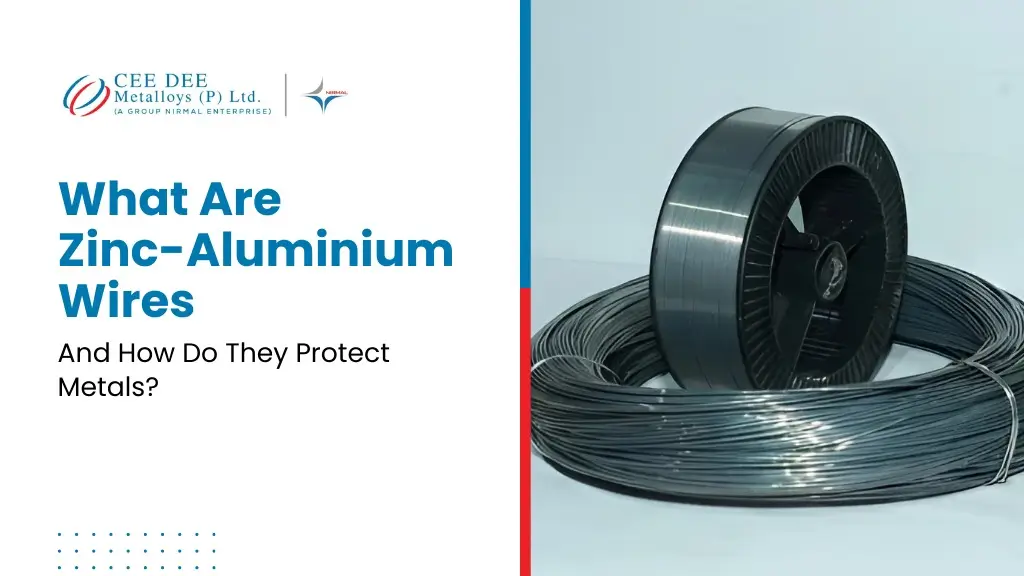
Zinc aluminium wire is a thermal spray feedstock product manufactured by alloying zinc metal with aluminium in specific proportions. The most commercially important composition for industrial coating applications is Zn-15Al, containing approximately 85% zinc and 15% aluminium by weight. Other compositions include Zn-20Al (80% Zn, 20% Al) for extreme environments, and Zn-5Al (95% Zn, 5% Al) as a transition composition with properties intermediate between pure zinc and the standard Zn-15Al alloy.The wire is manufactured by continuous casting of the molten alloy followed by drawing through progressively smaller dies to the target diameter. Achieving homogeneous alloy distribution throughout the wire cross-section is a critical manufacturing challenge, as segregation of aluminium-rich phases can cause inconsistent arc spray characteristics and variable coating quality. CeeDee Metalloys employs rigorous manufacturing controls to ensure consistent alloy homogeneity across all zinc aluminium wire production batches.Data Callout: Independent testing by the Thermal Spray Society has demonstrated that Zn-15Al coatings exhibit corrosion rates in marine splash zones of 0.5 to 1.5 micrometres per year, compared to 3 to 6 micrometres per year for pure zinc coatings under comparable conditions. This means Zn-15Al coatings can last two to four times longer than pure zinc in the same environment.
The Role of Aluminium in the Alloy
Aluminium serves two distinct protective functions within the Zn-Al coating matrix. First, aluminium is a highly reactive metal that rapidly oxidises on exposure to air, forming a dense, adherent aluminium oxide layer (Al2O3) on the surface of the coating. This oxide layer acts as an additional physical barrier that slows the penetration of corrosive species through the coating. Second, aluminium refines the microstructure of the spray deposit, reducing porosity and increasing coating density compared to pure zinc coatings deposited under the same spray parameters.2. How Zinc Aluminium Wire Protects Metal
The metal protection mechanism of zinc aluminium coatings is a combination of three distinct actions working simultaneously.Galvanic (Sacrificial) Protection
Zinc is electrochemically less noble than steel, meaning it corrodes preferentially when in electrical contact with steel in the presence of an electrolyte. Even if the coating is scratched or locally damaged, the surrounding Zn-Al coating continues to sacrifice itself to protect the exposed steel. This self-healing galvanic mechanism is the fundamental reason why thermal spray zinc and zinc-aluminium coatings outperform organic paint systems, which rely solely on barrier protection.Barrier Protection
The dense, low-porosity microstructure of a Zn-15Al arc spray coating forms a physical barrier that significantly slows the diffusion of moisture, oxygen, and corrosive ions to the steel substrate. The aluminium oxide layer that forms on the coating surface further enhances this barrier effect. Together, these mechanisms extend the time before corrosive species can reach the steel to initiate rust formation.Passivation in Corrosive Environments
In environments with elevated chloride concentrations such as coastal and offshore locations, pure zinc coatings can be subject to accelerated attack. The aluminium content of Zn-15Al alloy coatings increases the chemical stability of the coating in chloride environments, reducing the dissolution rate of zinc and extending the effective service life of the coating significantly.💡When specifying zinc aluminium coatings for offshore or coastal structures, always request an independent coating specification from a qualified corrosion engineer. The correct combination of alloy composition, coating thickness, and sealer type is critical to achieving the design service life. CeeDee Metalloys can provide technical support for coating specification development.
3. Types and Alloy Grades of Zinc Aluminium Wire
The zinc aluminium wire family encompasses several alloy compositions, each optimised for specific environments and performance requirements.| Alloy | Composition | Corrosion Performance | Best Environment | Relative Cost |
|---|---|---|---|---|
| Zn-5Al | 95% Zn, 5% Al | Moderate improvement over pure Zn | Mild industrial, C2-C3 | Low-moderate |
| Zn-15Al (Standard) | 85% Zn, 15% Al | 2-4x better than pure Zn | Marine, offshore, C4-C5 | Moderate |
| Zn-20Al | 80% Zn, 20% Al | Best in class alloy | Extreme marine, CX | Moderate-high |
Wire Diameter Options
Zinc aluminium wire for arc spray is supplied in diameters of 1.6 mm, 2.0 mm, and 3.2 mm, with 1.6 mm being the most widely used in standard arc spray guns. Wire-fed flame spray systems typically use 3.2 mm or 4.76 mm diameter. All diameters are available from CeeDee Metalloys zinc aluminium wire in spool packaging suitable for standard spray gun feed systems.4. Target Applications for Metal Protection
Zinc aluminium wire coatings are specified in engineering standards and project specifications for a well-defined range of high-performance applications where pure zinc coatings are not sufficient.Coastal and Marine Steel Structures
Bridges, jetties, port infrastructure, coastal retaining walls, and marine steel structures in the splash zone and tidal zone are the primary application targets for Zn-15Al coatings. ISO 20340 and NORSOK M-501 both reference zinc aluminium alloy coatings for offshore and marine applications.Offshore Oil and Gas Platforms
The structural steel jackets, topsides steelwork, and module frames of offshore oil and gas platforms represent some of the most demanding applications for any coating system. Zn-15Al arc spray coatings are specified in many major oil company coating standards for offshore atmospheric zone protection.Wind Turbine Towers
Both onshore and offshore wind turbine towers are significant users of zinc aluminium alloy coatings. The external surfaces of tower sections are arc-sprayed with Zn-15Al in the fabrication workshop before erection, providing long-term protection that eliminates the need for re-coating at height during the 25-year-plus operating life of the turbine.📖 Also Read: Zinc Rods Uses in Industrial Coatings
5. Industry Applications
The superior performance of zinc aluminium coatings has driven their adoption across multiple industries where long service life and minimal maintenance are critical requirements.Power Transmission Infrastructure
High-voltage transmission towers, substations, and overhead line structure steelwork are protected with zinc aluminium coatings in coastal and industrial zones. The combination of high electrical conductivity environment, elevated humidity, and industrial pollutant exposure in these locations makes Zn-15Al the preferred specification over pure zinc for long-term asset protection.Shipbuilding and Offshore Fabrication
Major shipyards and offshore fabrication yards use Zn-15Al arc spray as part of their standard corrosion protection systems for vessel hull sections, ballast tank internals, and structural components. The superior performance in salt spray testing compared to pure zinc coatings provides confidence in long service life between dry-dock intervals. See CeeDee Metalloys applications for detailed sector information.Railways and Transportation
Steel bridge beams, rail station canopies, and railway signal structures in coastal regions are specified with zinc aluminium coatings under national rail maintenance standards. The reduction in coating maintenance frequency compared to paint systems provides significant operational and cost benefits for infrastructure operators.Source Zinc Aluminium Wire from a Trusted Indian Manufacturer
CeeDee Metalloys supplies Zn-15Al and other zinc aluminium alloy wires in spool formats for arc spray and flame spray systems. Consistent alloy homogeneity and tight dimensional tolerances ensure reliable coating performance on every project.View Zinc Aluminium WireRenewable Energy Infrastructure
Solar farm mounting structures in coastal and semi-arid regions, and the structural steelwork of hydropower facilities, are protected with zinc aluminium coatings to provide long-term corrosion resistance matched to the 25 to 30-year design life of modern renewable energy installations.6. Commercial and Infrastructure Uses
Zinc aluminium wire coatings are also increasingly used in commercial and urban infrastructure applications where extended service life and reduced maintenance cost are valued.Urban Bridge Infrastructure
Urban bridges in coastal cities exposed to both salt-laden air and road de-icing salt spray represent a challenging environment for steel corrosion protection. Zn-15Al coatings are increasingly specified for new bridge construction and major bridge rehabilitation projects in these locations, replacing traditional paint systems that require repainting every 10 to 15 years.Stadium and Arena Steelwork
Large-span steel roof structures for stadiums, arenas, and exhibition halls in coastal or humid climates benefit from zinc aluminium arc spray coatings on exposed structural members. The aesthetic appearance of a thermally sprayed zinc-aluminium coating, which can be overcoated with architectural paint systems, is compatible with the visual requirements of public architecture.Industrial Plant Structural Steelwork
Structural steelwork in chemical plants, fertiliser manufacturing facilities, and process industries handling corrosive materials benefits from zinc aluminium coatings, which provide extended protection against the combined effects of industrial chemical contamination and atmospheric moisture.📖 Also Read: Tin Zinc Wires in Industrial Coatings
7. Speciality and Niche Applications
Beyond mainstream structural coating, zinc aluminium wire coatings serve several specialised technical applications.Splash Zone Coating on Subsea Structures
The splash zone of marine piles, jacket structures, and quay walls represents the most aggressive corrosion zone in any marine environment, experiencing alternating wet and dry cycles combined with physical wave impact. Thick Zn-20Al coatings, often exceeding 400 micrometres, are specified for splash zone protection of critical structures.Protection of Aluminium Structures
Although aluminium is self-protecting through natural oxide formation, aluminium structures in contact with concrete, steel, or other dissimilar metals can experience accelerated corrosion due to galvanic coupling. A zinc aluminium alloy thermal spray coating can be applied to the aluminium surface to modify its electrochemical behaviour and reduce galvanic corrosion risk at bimetallic joints.Wear-Resistant Zinc-Aluminium Composite Coatings
Research and industrial trials have demonstrated that zinc-aluminium coatings modified with ceramic particle additions (such as alumina or silicon carbide) provide improved wear resistance alongside excellent corrosion protection. These composite coatings are used in applications combining corrosion and mechanical wear, such as hydraulic gate faces and sluice gate seating surfaces.8. How to Choose the Right Zn-Al Wire
Selecting the appropriate zinc aluminium alloy wire requires careful consideration of the service environment, desired service life, available spray equipment, and project budget.Environment-Based Alloy Selection
For mild to moderate industrial environments (ISO 9223 categories C2 to C3), Zn-5Al or high-purity zinc wire is generally adequate. For marine, coastal, and aggressive industrial environments (C4 to C5), Zn-15Al is the standard specification. For extreme marine environments and offshore splash zones (CX), Zn-20Al or thick Zn-15Al coatings with sealer topcoat are recommended.Compatibility with Existing Specifications
Always verify that the selected alloy composition matches the project coating specification and any applicable national or international standards. For projects governed by NORSOK M-501, ISO 20340, or major oil company specifications, the alloy, thickness, and sealer requirements will be explicitly defined. CeeDee Metalloys can provide material certificates to confirm alloy compliance with project specifications.💡Always check that your arc spray gun is calibrated for the alloy wire being used. Zn-15Al requires slightly different arc voltage and wire feed rate settings compared to pure zinc wire due to differences in electrical resistivity and melting behaviour. Refer to the spray gun manufacturer’s alloy-specific recommendations or contact CeeDee Metalloys for guidance.
9. Performance, Maintenance, and Best Practices
Maximising the performance of zinc aluminium wire coatings requires rigorous application quality control and informed in-service management.Application Quality Control
Critical quality parameters for Zn-Al arc spray coatings include surface cleanliness (Sa 2.5 minimum), surface profile (50 to 100 micrometres Rz), coating thickness at the specified frequency, and adhesion pull-off strength. For marine and offshore applications, soluble salt testing before blasting and immediately before spraying should be conducted to ensure the substrate meets the chloride contamination limit specified in the project coating standard.Sealer Application
Zinc aluminium coatings benefit significantly from the application of a penetrating sealer within four hours of spraying. The sealer fills the inherent porosity of the spray deposit, reducing moisture ingress and extending service life. Epoxy, vinyl, and silicone-based sealers are compatible with Zn-15Al coatings.Key Takeaways
- Zinc aluminium wire (Zn-15Al) provides two to four times better corrosion resistance than pure zinc wire in marine and industrial environments.
- The alloy combines galvanic protection from zinc with barrier protection from the dense aluminium oxide layer.
- Zn-15Al is the standard specification for offshore platforms, coastal bridges, wind turbines, and marine structures.
- Wire diameter must match the spray gun specification for reliable feeding and consistent arc characteristics.
- Sealer application within four hours of spraying significantly extends the service life of Zn-Al coatings.
- CeeDee Metalloys supplies zinc aluminium wire across India with full material certification and technical support.
10. CeeDee Metalloys Serves Customers Across India
CeeDee Metalloys distributes zinc aluminium wire and other zinc metallizing consumables to corrosion protection contractors, fabricators, and industrial maintenance teams throughout India.Zinc Aluminium Wire Suppliers – North and West India
Zinc Aluminium Wire Suppliers – East and Central India
Related Products and Services
11. Related Reading
Articles
Upgrade Your Corrosion Protection with Zinc Aluminium Wire
CeeDee Metalloys supplies Zn-15Al and other zinc aluminium alloy wires for arc spray and flame spray systems across India. Contact our technical team for product specifications, compliance certificates, and project support.Explore Zinc Aluminium WireVisit ceedeemetalloys.com | Quality Assurance