Every electronics manufacturer, capacitor producer, and industrial coating specialist working with lead-free metallizing eventually needs a feedstock alloy that can deliver excellent solderability, non-toxicity, and corrosion resistance all at once. That is where tin zinc wire fits in. CeeDee Metalloys manufactures and supplies tin zinc wire alongside its full range of zinc metallizing consumables including zinc wire, zinc-aluminium wire, and metallizing spray machines. With rigorous quality assurance protocols and expertise spanning structural and electronic coating applications, CeeDee Metalloys is a trusted source for tin zinc wire across India.
Key Highlights
- Tin zinc wire is the standard feedstock for capacitor end metallizing (schoopage) in the electronics manufacturing industry.
- Sn80Zn20 (80% tin, 20% zinc) is the most widely used alloy composition for capacitor end termination.
- Tin zinc alloy wire is fully RoHS compliant, making it the preferred lead-free choice for electronics applications.
- Tin zinc coatings also find use in food contact equipment, water infrastructure, and specialised industrial coating applications.
- CeeDee Metalloys supplies tin zinc wire alongside zinc wire, zinc-aluminium wire, and metallizing equipment across India.
- Arc spray with Sn-Zn wire produces fine, uniform end metallization with excellent solderability for capacitor manufacturing.
In This Article
- What Is Tin Zinc Wire?
- How Tin Zinc Wire Works in Industrial Coatings
- Types and Alloy Compositions of Tin Zinc Wire
- Target Applications in Industrial Coatings
- Industry Applications
- Commercial and Infrastructure Uses
- Speciality and Niche Applications
- How to Choose the Right Tin Zinc Wire
- Performance, Maintenance, and Best Practices
- CeeDee Metalloys Serves Customers Across India
- Related Reading
- Frequently Asked Questions
Among the specialised thermal spray feedstock alloys, tin zinc wire occupies a unique position at the intersection of electronics manufacturing, food safety, and industrial corrosion protection. While zinc wire and zinc-aluminium alloy wire dominate the structural coating market, tin zinc wire serves critical applications in capacitor manufacturing, food and beverage equipment, and water infrastructure where tin’s specific material properties are indispensable.
1. What Is Tin Zinc Wire?
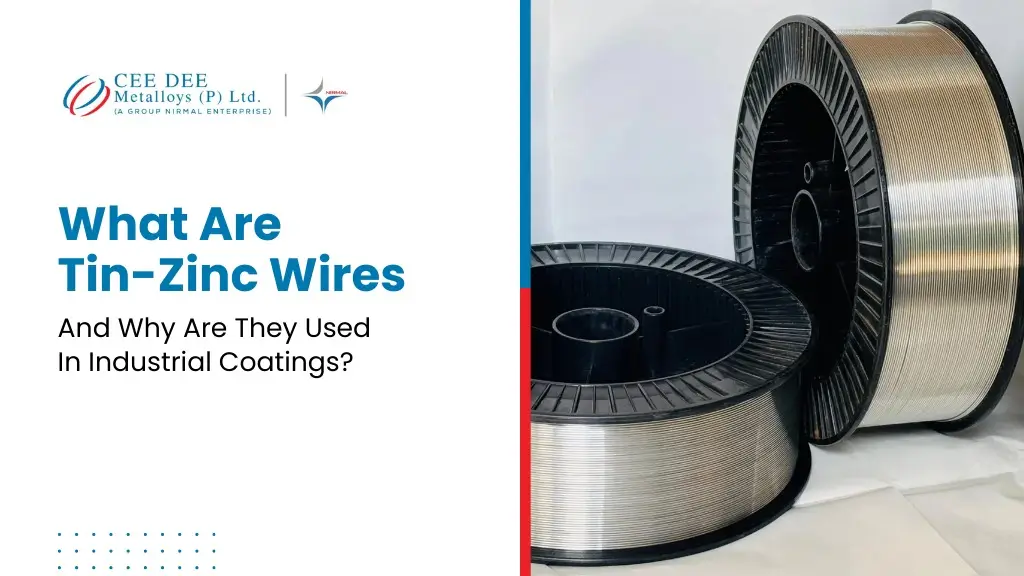
Tin zinc wire is a thermal spray feedstock alloy produced by alloying tin and zinc in defined proportions. The alloy exploits the complementary properties of both metals: zinc’s electrochemical activity provides galvanic corrosion protection, while tin contributes non-toxicity, excellent solderability, a bright metallic appearance, and compatibility with food and water contact applications.
Unlike the structural coating market where single-purpose zinc or zinc-aluminium wires dominate, the tin zinc alloy family spans a wide range of compositions from tin-rich (Sn80Zn20) to zinc-rich (Zn80Sn20), each optimised for different application requirements. This compositional versatility makes tin zinc wire one of the most application-specific thermal spray feedstock materials available from CeeDee Metalloys.
Data Callout: The global capacitor market, which is one of the primary consumers of tin zinc wire for schoopage (end metallization), was valued at over USD 24 billion in 2024 according to industry reports. Film capacitors, which rely heavily on tin zinc arc spray end metallization, represent a major and growing segment driven by renewable energy and electric vehicle applications.
Key Material Properties of Tin Zinc Alloys
The unique properties of tin zinc alloys that make them valuable in industrial coating applications include a melting range of approximately 200 to 420 degrees Celsius (lower than pure zinc), excellent electrical conductivity in the deposited coating, compatibility with soldering processes for electronics assembly, non-toxic nature suitable for food and water contact, and a bright, aesthetically appealing appearance compared to the grey surface of zinc or zinc-aluminium coatings.
2. How Tin Zinc Wire Works in Industrial Coatings
Tin zinc wire is processed through arc spray or flame spray systems in the same manner as other thermal spray wire feedstocks. The specific properties of the deposited coating depend on the alloy composition, spray process parameters, substrate preparation, and post-spray treatment.
Arc Spray Process for Electronics Applications
In capacitor manufacturing, the arc spray schoopage process uses automated machines that feed twin Sn-Zn wires into an arc spray gun mounted on a precision indexing table. The capacitor wound elements are presented to the spray gun in batches, and the end surfaces are metallized with a controlled thickness of tin zinc alloy. The fine droplet size produced by arc spray ensures excellent penetration of the molten alloy into the wound film edges, creating a reliable electrical connection between the tin zinc termination and the metallized film surfaces.
Flame Spray Process for Corrosion Protection
For structural and corrosion protection applications, tin zinc wire can be processed through wire-fed or rod-fed flame spray guns. The lower melting temperature of Sn-Zn alloys compared to pure zinc means that flame spray parameters must be adjusted to prevent overheating and oxidation of the tin content. Correct gas flow balance and standoff distance are critical to producing a clean, low-oxide coating.
When using tin zinc wire in flame spray applications, always verify that the oxy-fuel gas ratios are correctly set for the specific alloy composition. The higher tin content in Sn80Zn20 wire means the alloy melts at a lower temperature than pure zinc, and excessive flame temperature can cause zinc evaporation and coating composition drift. Consult CeeDee Metalloys or the spray gun manufacturer for alloy-specific parameter recommendations.
3. Types and Alloy Compositions of Tin Zinc Wire
The tin zinc alloy wire family encompasses several standard compositions, each with distinct properties and application targets.
| Alloy | Composition | Melting Range (°C) | Primary Use | Key Property |
|---|---|---|---|---|
| Sn80Zn20 | 80% Sn, 20% Zn | 199-350 | Capacitor schoopage, electronics | High solderability |
| Sn60Zn40 | 60% Sn, 40% Zn | 200-340 | Electronics, food equipment | Balanced Sn-Zn properties |
| Zn80Sn20 | 80% Zn, 20% Sn | 250-419 | Corrosion protection, water contact | High corrosion resistance |
| Pure Tin (Sn99.9) | 99.9% Sn | 232 | Food contact, potable water | Non-toxic, bright finish |
Wire Diameter and Packaging
Tin zinc wire for arc spray applications is supplied in 1.6 mm and 2.0 mm diameters, wound on standard spool formats compatible with common arc spray gun feed systems. For schoopage applications in capacitor manufacturing, tight diameter tolerances of plus or minus 0.03 mm are essential to maintain consistent spray parameters and coating uniformity across high-volume production runs.
📖 Also Read: Use of Zinc in Electronics
4. Target Applications in Industrial Coatings
Tin zinc wire coatings are specified for a distinct set of applications that leverage the unique combination of tin and zinc properties.
Capacitor End Metallization (Schoopage)
The primary and highest-volume application for tin zinc wire is the arc spray metallization of wound film capacitor end faces, a process known as schoopage. In this process, the cut ends of a wound polypropylene or polyester film capacitor element are arc-sprayed with Sn80Zn20 alloy to create a solderable metallic end termination that provides reliable electrical connection to the internal metallized film layers. The quality of the schoopage is a critical determinant of the electrical performance, reliability, and lifetime of the finished capacitor.
Thin Film Electronic Component Coating
Tin zinc alloy coatings are used on various electronic components and circuit board elements where a solderable, electrically conductive coating is required. The compatibility of Sn-Zn alloys with standard soldering processes and their lead-free compliance make them the preferred choice for RoHS-compliant electronics manufacturing.
Food and Beverage Equipment Coating
The non-toxic nature of tin and zinc makes Sn-Zn alloy coatings suitable for use on steel surfaces in food processing and beverage manufacturing environments. Tin-rich alloy coatings are applied to storage tanks, pipework, and equipment frames where food contact or proximity to food products requires a coating material with regulatory approval for food safety.
📖 Also Read: Zinc Aluminium Wires: Metal Protection Benefits
5. Industry Applications
Tin zinc wire serves several distinct industries, each utilising the alloy’s specific properties for different coating objectives.
Electronics and Electrical Components
The electronics industry is the largest consumer of tin zinc wire, primarily through the capacitor manufacturing sector. Film capacitors for power electronics, motor drives, inverters, and renewable energy converters all rely on high-quality schoopage end metallization. As global demand for electric vehicles and renewable energy converters grows, demand for tin zinc wire in capacitor manufacturing is expected to increase significantly. See CeeDee Metalloys’ overview of zinc use in electronics for related information.
Food Processing Industry
Food processing plants, canneries, and beverage facilities use tin zinc alloy coatings on internal surfaces of processing equipment where regulatory compliance with food contact material standards is required. The anti-microbial properties of zinc combined with tin’s traditional association with food-safe tin plate make Sn-Zn alloys a natural fit for these applications.
Water Treatment and Distribution
Zinc and tin are both recognised as safe materials for potable water contact at controlled concentrations. Bio-zinc and zinc-tin alloy coatings are applied to steel water storage tanks, distribution pipework, and water treatment plant infrastructure to provide corrosion protection while meeting potable water contact regulatory requirements.
Source Tin Zinc Wire for Your Industrial Application
CeeDee Metalloys supplies tin zinc alloy wire in multiple compositions and diameters for electronics, food contact, water infrastructure, and corrosion protection applications. Contact our technical team for alloy selection support and pricing.
Automotive and Aerospace Sectors
Tin zinc coatings are used in automotive and aerospace component manufacturing as solderable surface finishes on connector housings, terminal blocks, and electrical bus bars. The lead-free, RoHS-compliant nature of Sn-Zn alloys makes them increasingly preferred over older lead-tin soldering alloys in these regulated industries.
6. Commercial and Infrastructure Uses
Beyond specialised industrial applications, tin zinc wire coatings also serve commercial and infrastructure markets where specific material properties are required.
Architectural Metalwork
The bright, silver-white appearance of tin-rich alloy coatings makes them attractive for architectural metalwork applications where aesthetics are important alongside corrosion protection. Tin zinc coated steel railings, balustrades, and decorative structural elements in public spaces can maintain their bright appearance longer than painted surfaces while providing durable protection.
Municipal Water Infrastructure
Municipal water authorities in India and globally have approved tin and zinc-based coatings for use on steel water storage tanks and distribution infrastructure. The combination of corrosion protection and regulatory compliance for potable water contact makes tin zinc coatings a valuable option for water infrastructure projects. Learn more about CeeDee Metalloys’ capabilities on the applications page.
Pharmaceutical and Healthcare Facility Equipment
Steel equipment, racks, and structural elements in pharmaceutical manufacturing clean rooms and healthcare facilities require coating materials that do not outgas harmful substances or support microbial growth. Tin zinc coatings meet these requirements while providing the mechanical durability needed in high-use facility environments.
📖 Also Read: Zinc Rods Uses in Industrial Coatings
7. Speciality and Niche Applications
Tin zinc alloy wire coatings serve several specialised technical niches where their unique combination of properties provides performance that cannot easily be matched by other coating systems.
Resistive Element Coatings
In electronic component manufacturing, tin zinc alloy coatings are used to create resistive elements with controlled electrical resistance values. The resistivity of the deposited coating can be tuned by adjusting the alloy composition and coating thickness, enabling the production of resistor elements for precision electronic instruments.
Corrosion Protection of Copper and Brass
Tin zinc coatings are applied to copper and brass components to protect them from tarnishing and selective dezincification corrosion in aggressive environments. The coating preserves the electrical conductivity of the base metal while providing a protective barrier against oxidation and chemical attack.
Bearing and Bushing Surface Coatings
Tin-rich alloy coatings are used as surface treatments on steel bearings and bushings to provide initial lubrication and wear protection during the running-in phase of machinery operation. The low friction coefficient and good conformability of tin-rich alloys make them suitable for this application.
8. How to Choose the Right Tin Zinc Wire
Selecting the correct tin zinc alloy wire for a specific application requires consideration of the required coating properties, compatibility with the spray process, and applicable regulatory or specification requirements.
Electronics vs. Corrosion Protection Applications
For capacitor schoopage and electronics end termination, Sn80Zn20 (80% Sn, 20% Zn) is the standard choice, optimising solderability and electrical contact resistance. For corrosion protection of steel in food or water contact applications, zinc-rich compositions (Zn80Sn20) provide better electrochemical protection while still meeting non-toxicity requirements.
RoHS Compliance Verification
For electronics applications covered by RoHS, WEEE, or similar regulations, always request a Certificate of Conformance confirming that the tin zinc wire composition meets the applicable standard. CeeDee Metalloys provides full documentation for all tin zinc wire products to support customer regulatory compliance requirements.
When transitioning from lead-tin to lead-free tin zinc alloy wire in capacitor schoopage applications, be aware that the lower melting temperature and different viscosity of Sn-Zn alloys may require adjustment of the schoopage machine parameters. Consult the machine manufacturer and CeeDee Metalloys’ technical team for guidance on optimising the transition.
9. Performance, Maintenance, and Best Practices
Achieving optimal performance from tin zinc wire coatings requires attention to application parameters, quality control, and in-service monitoring specific to the alloy’s properties.
Quality Control for Capacitor Schoopage
Key quality parameters for capacitor end metallization include coating thickness uniformity, adhesion pull-off strength, electrical contact resistance, and solderability. Regular test capacitors should be manufactured at the start of each production run and tested to confirm that spray parameters are correctly set for the current batch of tin zinc wire.
Coating Quality for Corrosion Protection
For tin zinc corrosion protection coatings, the same surface preparation requirements apply as for other thermal spray zinc coatings: blast cleaning to Sa 2.5 minimum, anchor profile of 50 to 100 micrometres Rz, and spraying within two hours of blast cleaning. Coating thickness should be verified with a calibrated gauge, and adhesion testing performed on witness panels.
Key Takeaways
- Tin zinc wire (Sn80Zn20) is the standard feedstock for capacitor end metallization (schoopage) in electronics manufacturing.
- Tin zinc alloy wire is RoHS compliant, making it the preferred lead-free alternative in electronics and electrical applications.
- Zinc-rich Sn-Zn compositions provide corrosion protection suitable for food, water, and pharmaceutical contact applications.
- Wire diameter must match the arc spray gun specification, with tight tolerances essential for consistent schoopage quality.
- CeeDee Metalloys supplies tin zinc wire in multiple compositions with full regulatory compliance documentation.
- Spray parameter optimisation for tin zinc alloys must account for the lower melting temperature compared to pure zinc or zinc-aluminium.
10. CeeDee Metalloys Serves Customers Across India
CeeDee Metalloys supplies tin zinc wire and other metallizing consumables to electronics manufacturers, industrial coating contractors, and equipment maintenance teams throughout India.
Zinc Wire Suppliers Across India
More Supply Locations
Zinc Aluminium Wire Suppliers
11. Related Reading
Articles
Products and Company
12. Frequently Asked Questions
What is tin zinc wire used for in industrial coatings?
Tin zinc wire is used in thermal spray metallizing for capacitor end termination (schoopage), thin film deposition on electronic components, and as a specialised corrosion-resistant coating for food contact and water contact applications where pure zinc or zinc-aluminium alloys may not be suitable.
What is the most common tin zinc alloy composition for capacitor metallizing?
The most widely used tin zinc alloy for capacitor end metallizing (schoopage) is Sn80Zn20, containing 80% tin and 20% zinc. This composition provides a good balance of electrical conductivity, solderability, and mechanical adhesion to the capacitor wound element.
Is tin zinc wire RoHS compliant?
Yes. Tin zinc alloy wire containing only tin and zinc without lead is fully compliant with the EU RoHS Directive 2011/65/EU. It is one of the preferred lead-free alternatives for electronics and electrical component manufacturing.
How does tin zinc wire compare to pure tin wire for capacitor end metallizing?
Tin zinc alloy wire provides better adhesion to the wound capacitor film edge than pure tin, and the zinc content improves the hardness and wear resistance of the deposited metallization. Pure tin is more ductile but tends to produce softer, less durable end connections than Sn-Zn alloys.
What spray process is used for tin zinc wire in electronics applications?
Arc spray is the standard process for tin zinc wire in capacitor end metallizing. Automated schoopage machines use twin-wire arc spray with precise control of spray parameters to ensure consistent end metallization quality.
Can tin zinc wire be used for structural corrosion protection coating?
While tin zinc alloy coatings do provide corrosion protection, they are not typically specified for structural steel coating applications where pure zinc wire or zinc-aluminium wires are more cost-effective. Tin zinc coatings are primarily used in electronics, food contact, and water contact applications.
Where can I source tin zinc wire in India?
CeeDee Metalloys manufactures and supplies tin zinc wire for industrial and electronics coating applications across India. Visit mistyrose-ostrich-677126.hostingersite.com/ for contact information.
What diameters of tin zinc wire are available for arc spray applications?
Tin zinc wire for arc spray applications is typically available in 1.6 mm and 2.0 mm diameters. The correct diameter depends on the arc spray gun model and the specific application parameters. CeeDee Metalloys can supply tin zinc wire in the required diameter and spool format for most standard spray gun systems.