Use of Zinc in electronics
Key Highlights
- Zinc is used in at least six distinct roles in electronics manufacturing, from capacitor metallizing to battery anodes and die-cast housings.
- Zinc oxide (ZnO) is a versatile semiconductor material used in varistors, thin-film transistors, solar cells, and optoelectronics.
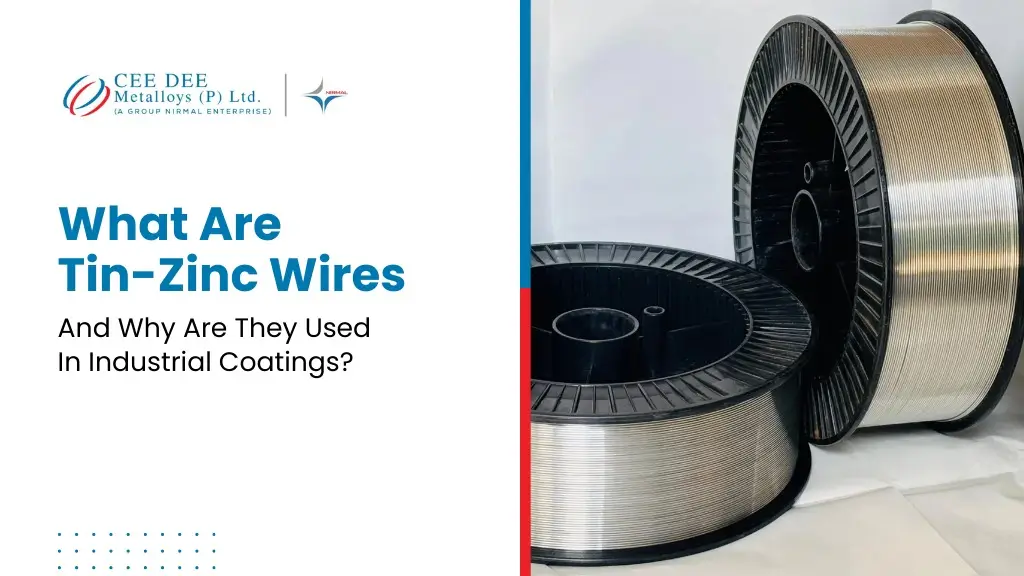
- Tin-zinc wire (Sn80Zn20) is the standard feedstock for capacitor end metallization (schoopage) in film capacitor manufacturing.
- Zinc die casting (Zamak alloys) provides excellent EMI/RFI shielding, dimensional accuracy, and thermal management for electronic enclosures.
- Zinc-air battery technology is positioned as a key energy storage solution for renewable energy and electric vehicle applications.
- CeeDee Metalloys supplies tin zinc wire and zinc metallizing consumables to electronics manufacturers across India.
In This Article
Zinc is not the first element that comes to mind when engineers and designers think about electronics manufacturing. Copper, gold, silver, and silicon dominate the conversation about electronic materials, and rightly so for their primary roles in conduction, interconnection, and computation. Yet zinc plays a quietly essential role across multiple layers of the electronics manufacturing industry, from the end termination of passive components to battery chemistry, die-cast enclosures, and emerging semiconductor applications.CeeDee Metalloys supports the electronics manufacturing sector through the supply of tin zinc wire for capacitor schoopage, high-purity zinc wire for electronic component coating, and zinc metallizing spray machines for precision deposition applications. With a commitment to quality assurance that meets the exacting standards of electronics manufacturing, CeeDee Metalloys is a reliable supply partner for zinc-consuming electronics manufacturers across India.- What Is Zinc’s Role in Electronics?
- How Zinc Properties Support Electronics Applications
- Forms of Zinc Used in Electronics
- Zinc in Capacitor Manufacturing
- Industry Applications
- Zinc Oxide in Semiconductor and Electronic Devices
- Zinc in Battery Technology
- How to Choose Zinc Products for Electronics
- Performance, Maintenance, and Best Practices
- CeeDee Metalloys Serves Customers Across India
- Related Reading
- Frequently Asked Questions
1. What Is Zinc’s Role in Electronics?
Zinc contributes to electronics manufacturing in several distinct forms and at several different stages of the product lifecycle. As a metallic feedstock for thermal spray processes, zinc-tin alloys are used for capacitor end metallization. As a pure metal, zinc serves as the anode in primary and secondary batteries. As a compound, zinc oxide is a critical semiconductor and functional ceramic used in protective devices and optoelectronics. As an alloy, zinc is the primary constituent of die casting alloys used to produce electronic component housings and structural parts.Each of these roles exploits different aspects of zinc’s material properties, demonstrating the versatility that makes zinc an irreplaceable element in the modern electronics supply chain. Understanding zinc’s diverse electronic applications is important for engineers, procurement specialists, and product designers who need to specify the right zinc-based material for each function in the electronic product or system they are developing.Data Callout: The global electronics and electrical sector consumes approximately 7% of world zinc production annually, according to the International Zinc Association. This represents over 900,000 metric tonnes per year of zinc consumed in batteries, capacitors, die castings, and electronic component coatings.
Zinc’s Key Properties Relevant to Electronics
Zinc’s suitability for electronics applications derives from several key properties: its electrical conductivity (approximately 1.69 x 10^7 S/m), which is adequate for end terminations and protective coatings; its low melting point (419 degrees Celsius), enabling processing at temperatures compatible with polymer substrates; its electrochemical activity, enabling use as battery anode material; and the unique semiconductor properties of zinc oxide, which enable both passive protection (varistors) and active electronic function (thin-film transistors).2. How Zinc Properties Support Electronics Applications
The diverse roles of zinc in electronics are enabled by the interplay of its metallic, electrochemical, and compound properties. Understanding which property is most relevant to each application guides appropriate material selection and process specification.Electrical Conductivity and Solderability
In capacitor end termination and component surface finish applications, zinc’s electrical conductivity and its ability to form alloys with excellent solderability (particularly tin-zinc alloys) are the critical properties. The tin-zinc alloy deposited by arc spray schoopage must make reliable electrical contact with the metallized film layers inside the capacitor, withstand soldering temperatures during circuit board assembly, and maintain low electrical resistance over the service life of the capacitor.Electrochemical Energy Storage
Zinc’s electrochemical potential and high theoretical capacity (820 mAh/g) make it one of the most attractive anode materials for aqueous electrochemical energy storage. These properties underpin zinc’s role in zinc-carbon batteries, zinc-manganese alkaline batteries, zinc-air batteries, and emerging rechargeable zinc-ion battery technologies.Semiconductor and Piezoelectric Properties of Zinc Oxide
Zinc oxide is a wide-bandgap semiconductor (bandgap 3.37 eV) with strong excitonic effects at room temperature, making it attractive for UV optoelectronics, thin-film transistors, and high-temperature electronics. Its piezoelectric properties enable its use in sensors, actuators, and resonators. Its non-linearity of resistivity with voltage (varistor effect) is exploited in surge protection devices.💡For electronics manufacturers sourcing tin zinc wire for capacitor schoopage, it is essential to specify the alloy composition, wire diameter, and spool format precisely. Variations in alloy homogeneity or dimensional tolerance can cause inconsistent schoopage quality that affects capacitor performance. CeeDee Metalloys manufactures tin zinc wire to tight specifications with full material traceability.
3. Forms of Zinc Used in Electronics
Zinc is consumed by the electronics industry in several distinct product forms, each optimised for the specific application it serves.| Form | Alloy / Grade | Primary Use in Electronics | Key Requirement |
|---|---|---|---|
| Tin-zinc alloy wire | Sn80Zn20 | Capacitor end metallization (schoopage) | Tight diameter tolerance, alloy homogeneity |
| High-purity zinc | SHG 99.99% | Battery anodes, electroplating | Minimal trace element contamination |
| Zinc oxide powder | Electronic grade ZnO | Varistors, semiconductors, phosphors | Controlled particle size, purity |
| Zamak die casting alloy | Zamak 3, 5, 7 | Electronic enclosures, connectors | Dimensional accuracy, surface finish |
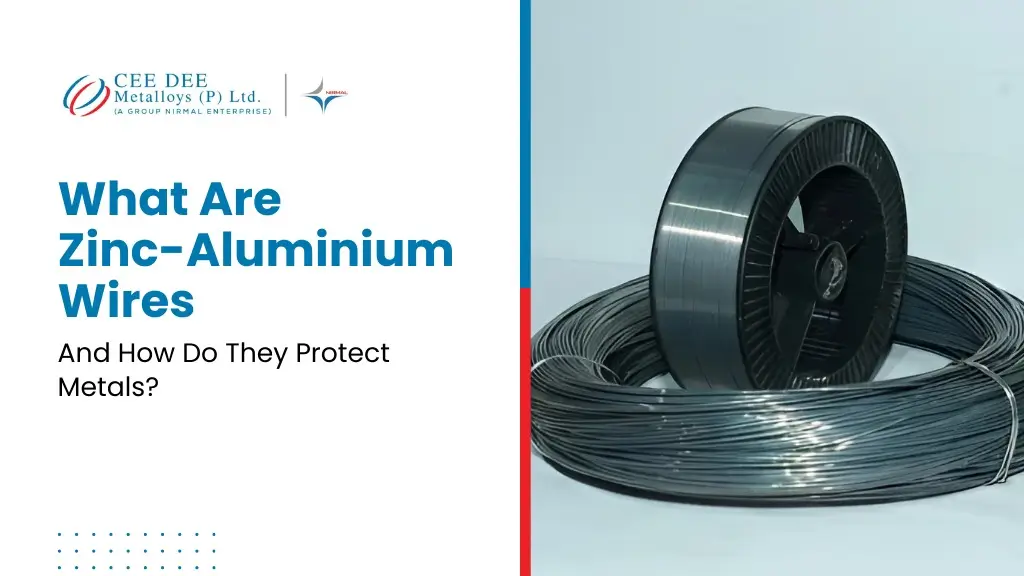
| Zinc-aluminium alloy wire | Zn-15Al | EMI shielding coatings on electronics housings | Corrosion resistance, coating adhesion |
📖 Also Read: Tin Zinc Wires in Industrial Coatings
4. Zinc in Capacitor Manufacturing
Film capacitors are essential components in power electronics, motor drives, inverters for renewable energy, and electric vehicle power systems. The quality of the end metallization (schoopage) applied to film capacitor wound elements is a critical determinant of capacitor performance, reliability, and service life.Metallized Film Capacitor Construction
In a metallized film capacitor, extremely thin layers of zinc or aluminium metal are deposited on polypropylene or polyester film by vacuum evaporation. These metallized films serve as the electrodes of the capacitor. The wound element is then subjected to schoopage, in which arc-sprayed tin-zinc alloy is deposited on both cut ends of the wound element to create the external electrical connections.The Schoopage Process
Schoopage is performed using automated arc spray machines that deposit Sn80Zn20 tin zinc alloy from tin zinc wire feedstock onto the end faces of batches of wound capacitor elements. The molten alloy droplets penetrate the wound film edges and solidify, creating an intimate metallic contact with thousands of individual metallized film layers. The quality of this contact determines the contact resistance, current-carrying capacity, and mechanical reliability of the finished capacitor.Role of Zinc in Metallized Film Electrodes
While aluminium is the most common metallized electrode material for polypropylene film capacitors, zinc metallization is used in some capacitor designs for polyester film capacitors and for the internal fusing metallized layer patterns that provide self-healing capability. Zinc’s slightly higher resistivity compared to aluminium is exploited to create controlled-resistance fuse zones in the metallized electrode that clear (open-circuit) when a local dielectric breakdown occurs, preserving the capacitor’s electrical function.📖 Also Read: 10 Lesser-Known Industrial Applications of Zinc Rods
5. Industry Applications
Zinc’s role in electronics manufacturing spans multiple industry sectors, each with specific requirements for zinc product form, purity, and performance.Consumer Electronics
Consumer electronics products including smartphones, tablets, laptops, and televisions contain zinc in multiple forms: die-cast zinc alloy structural components, zinc-electroplated hardware, zinc oxide in surge protection components, and battery zinc in primary cell batteries used in remote controls and peripherals. The global consumer electronics market drives significant volume demand for zinc in all these forms.Power Electronics and Renewable Energy
Power electronics systems for solar inverters, wind turbine converters, motor drives, and electric vehicle powertrains are among the largest consumers of film capacitors, and therefore of tin zinc wire for schoopage. The growth of global renewable energy capacity and electric vehicle adoption is driving strong demand growth for high-quality film capacitors and the tin zinc wire used in their manufacture. Explore CeeDee Metalloys’ applications in the renewable energy sector.Automotive Electronics
Modern vehicles contain between 50 and 150 electronic control modules, each of which may include film capacitors, zinc die-cast housings, and zinc-electroplated connectors and hardware. Electric vehicles have a significantly higher density of power electronics and passive components than conventional vehicles, further increasing per-vehicle zinc consumption in the automotive electronics supply chain.Supply Partner for Electronics-Grade Zinc Products
CeeDee Metalloys supplies tin zinc wire, high-purity zinc wire, and metallizing equipment for electronics manufacturing applications across India. Our quality systems ensure consistent alloy composition and dimensional compliance for demanding production processes.Explore Tin Zinc WireIndustrial Automation and Control
Industrial automation equipment, programmable logic controllers, variable frequency drives, and power quality correction equipment all contain power film capacitors that rely on tin zinc schoopage for their end terminations. The industrial automation sector’s continued growth drives consistent demand for high-quality tin zinc wire in the electronic component manufacturing supply chain.6. Zinc Oxide in Semiconductor and Electronic Devices
Zinc oxide occupies a unique position in the electronics materials landscape as a functional material with both passive protection and active semiconductor applications.Metal Oxide Varistors (MOVs)
Zinc oxide varistors (MOVs) are the most widely used surge protection devices in electronics and electrical systems worldwide. A zinc oxide varistor is a non-linear resistor whose resistance drops dramatically when the voltage across it exceeds a threshold value, diverting surge energy away from sensitive electronic components. Billions of MOVs are manufactured annually for use in power supplies, telecommunications equipment, industrial drives, and consumer electronics.Thin-Film Transistors and Transparent Electronics
Zinc oxide and amorphous zinc indium gallium oxide (IGZO) thin-film transistors are used in high-resolution display backplanes for OLED and LCD screens. The higher electron mobility of ZnO-based transistors compared to amorphous silicon enables higher refresh rates and larger display panels. This application is expected to grow significantly as display technology advances toward higher resolution and larger format screens.Solar Cell Applications
Zinc oxide is used in thin-film solar cells as a transparent conducting oxide (TCO) layer that transmits light while conducting electrical current. In cadmium telluride (CdTe) and copper indium gallium selenide (CIGS) solar cell architectures, ZnO serves as the front contact layer. Aluminium-doped zinc oxide (AZO) is also being developed as a lower-cost alternative to indium tin oxide (ITO) for transparent electrode applications.7. Zinc in Battery Technology
Zinc has been used as a battery anode material for over 150 years, and it continues to play an important and growing role in electrochemical energy storage.Zinc-Carbon and Alkaline Batteries
The zinc-carbon primary cell and the alkaline manganese dioxide cell are the two most produced battery types in the world by unit volume. Both use zinc as the anode material. The alkaline battery alone accounts for tens of billions of units produced annually globally, representing a massive and sustained demand for high-purity zinc metal in battery manufacturing.Zinc-Air Batteries for Energy Storage
Zinc-air batteries offer theoretical energy densities of up to 1,350 Wh/kg, far exceeding lithium-ion technology (approximately 250 Wh/kg), while using abundant, low-cost zinc as the anode. Rechargeable zinc-air battery systems are under active commercial development for grid energy storage and long-range electric vehicle applications. The commercial success of zinc-air energy storage would represent a transformative increase in demand for high-purity zinc metal.Zinc-Ion Rechargeable Batteries
Zinc-ion batteries using aqueous zinc sulphate electrolytes are emerging as a promising alternative to lithium-ion for stationary energy storage applications. These batteries offer improved safety (no flammable electrolyte), lower cost, and excellent recyclability. Several pilot-scale zinc-ion grid storage systems have been deployed, and commercial scale-up is progressing rapidly.💡For electronics manufacturers considering zinc-air or zinc-ion battery development, high-purity zinc (SHG 99.99%) is essential for achieving design battery performance. CeeDee Metalloys can supply zinc in wire and rod form for research, prototyping, and small-scale production of zinc-based energy storage devices. Contact our team to discuss specific purity and form requirements.
8. How to Choose Zinc Products for Electronics
Selecting the correct zinc product for an electronics application requires matching the product form, purity, and alloy composition to the specific function the zinc is performing in the end product.For Capacitor Schoopage
Specify tin zinc wire (Sn80Zn20) in the diameter required by the schoopage machine. Request material certificates confirming alloy composition within the specified tolerance range. Verify RoHS compliance documentation for electronics manufacturing regulatory requirements.For Battery Manufacturing
Specify SHG (99.99%) zinc in the form factor required by the battery production process. Trace element limits for specific impurities (lead, cadmium, iron, copper, tin) must be confirmed against battery design requirements. Zinc wire from CeeDee Metalloys is available with full chemical analysis certificates.For Die Casting Electronic Enclosures
Select the appropriate Zamak alloy grade (typically Zamak 3 for general purpose, Zamak 5 for higher strength, Zamak 7 for improved ductility) based on the mechanical and surface finish requirements of the die-cast component. Zinc alloy ingot feedstock for die casting is available from CeeDee Metalloys through our product range.9. Performance, Maintenance, and Best Practices
Achieving optimal performance from zinc products in electronics applications requires careful attention to material quality, process control, and supply chain management.Quality Management for Capacitor Schoopage
Electronics manufacturers should maintain incoming inspection of tin zinc wire lots, including dimensional verification and alloy composition spot checking by X-ray fluorescence or optical emission spectrometry. Production monitoring should include regular electrical contact resistance measurements on schoopage test samples to detect process drift before it affects product quality.Supply Chain Traceability
Electronics manufacturing supply chains are subject to increasing regulatory requirements for material traceability, conflict minerals compliance, and environmental certification. CeeDee Metalloys maintains full batch traceability for all zinc products and can provide the documentation needed to support customer compliance requirements.Key Takeaways
- Zinc plays at least six distinct roles in electronics manufacturing, from capacitor metallizing to battery anodes, die casting, and semiconductor devices.
- Tin zinc wire (Sn80Zn20) is the critical feedstock for capacitor end metallization (schoopage) in film capacitor production.
- Zinc oxide serves as both a passive protective material (varistors) and an active semiconductor in thin-film transistors and solar cells.
- Zinc-air and zinc-ion battery technologies represent significant growth opportunities for high-purity zinc in future energy storage markets.
- Electronics-grade zinc products require tight purity control and full material traceability to meet manufacturing quality requirements.
- CeeDee Metalloys provides tin zinc wire and zinc metallizing products with the quality documentation needed for electronics manufacturing compliance.
10. CeeDee Metalloys Serves Customers Across India
CeeDee Metalloys supplies tin zinc wire, zinc wire, and related metallizing consumables to electronics manufacturers and industrial customers throughout India.Zinc Wire Suppliers Across India
More Zinc Wire Supply Locations
Zinc Aluminium Wire and Metallizing Equipment
11. Related Reading
Articles
Products and Company
Zinc Products for Electronics Manufacturing
CeeDee Metalloys supplies tin zinc wire, high-purity zinc wire, and metallizing equipment for electronics manufacturers and industrial customers across India. Contact our technical team for product specifications, compliance documentation, and competitive pricing.Contact CeeDee MetalloysLearn more at ceedeemetalloys.com | Quality Assurance