CeeDee Metalloys is a leading manufacturer and supplier of high-purity zinc wire, zinc-aluminium wire, and zinc metallizing spray machines designed specifically for thermal spray applications.
Key Highlights
- Thermal spray zinc coating can extend structural lifespan by 30 to 75 years in mild environments.
- Both arc spray and flame spray methods deliver sacrificial galvanic protection to steel substrates.
- Proper surface preparation to Sa 2.5 or Sa 3 is the single most critical step in the process.
- Zinc-aluminium alloy wires offer superior performance in marine and offshore environments.
- Portable zinc metallizing machines enable on-site application to bridges, tanks, and large structures.
- CeeDee Metalloys supplies high-purity zinc wire, zinc-aluminium wire, and metallizing spray machines across India.
In This Article
- What Is Thermal Spray Zinc Coating?
- How Thermal Spray Zinc Coating Works
- Types of Thermal Spray Zinc Processes
- Target Applications and Structural Use Cases
- Industry Applications
- Commercial and Infrastructure Uses
- Speciality and Niche Applications
- How to Choose the Right Zinc Coating System
- Performance, Maintenance, and Best Practices
- CeeDee Metalloys Serves Customers Across India
- Related Reading
- Frequently Asked Questions
Corrosion is one of the most economically destructive forces acting on industrial infrastructure worldwide. According to the World Corrosion Organization, corrosion costs the global economy approximately 2.5% of GDP annually, a figure that translates to trillions of dollars in damaged bridges, pipelines, marine structures, and industrial facilities. Among all available corrosion control strategies, thermal spray zinc coating stands out as one of the most durable, field-applicable, and cost-effective solutions available to structural engineers and asset owners today.
CeeDee Metalloys is a leading manufacturer and supplier of high-purity zinc wire, zinc-aluminium wire, and zinc metallizing spray machines designed specifically for thermal spray applications. With a commitment to quality assurance and decades of industry experience, CeeDee Metalloys has become a trusted partner for contractors and engineers seeking reliable metallizing consumables across the Indian subcontinent.
1. What Is Thermal Spray Zinc Coating?
Thermal spray zinc coating, also known as zinc metallizing or zinc arc spray, is a surface treatment process in which zinc metal is melted and propelled as fine molten droplets onto a prepared steel or concrete substrate. The droplets solidify on contact, building up a dense, adherent metallic zinc layer that acts as both a barrier coating and a sacrificial anode, protecting the underlying steel from corrosion through galvanic action.
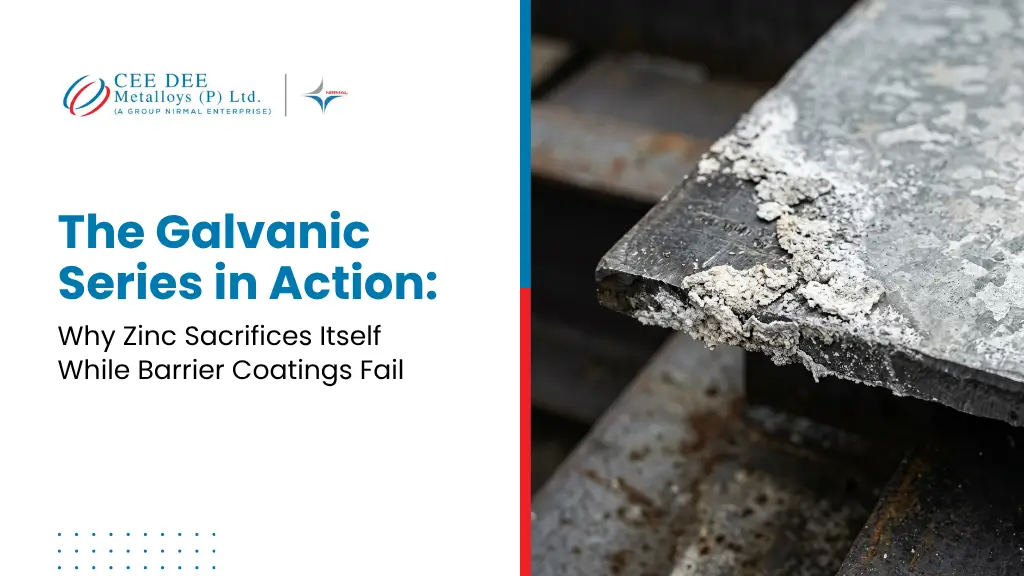
Unlike paint systems that form a simple barrier between the environment and the steel, thermal spray zinc provides electrochemical protection. Even if the coating is scratched or locally damaged, the surrounding zinc continues to corrode preferentially, leaving the base metal intact. This self-healing mechanism is the fundamental reason why thermal spray zinc coatings outlast conventional paint systems by several decades when applied correctly.
Data Callout: Studies by NACE International indicate that thermally sprayed zinc coatings in moderate industrial environments have demonstrated service lives exceeding 40 years without significant breakdown, compared to 10 to 15 years for high-build epoxy paint systems.
Zinc Metallizing vs. Other Protective Coatings
The term “zinc metallizing” is often used interchangeably with thermal spray zinc coating in the Indian market. Both refer to the same family of processes in which a zinc-bearing feedstock wire is thermally melted and deposited. The distinction lies in the heat source used: arc spray, flame spray, or high-velocity oxygen-fuel (HVOF) spray. Each variant produces coatings with slightly different porosity, bond strength, and microstructure characteristics, which are discussed in detail in Section 3.
2. How Thermal Spray Zinc Coating Works
The thermal spray zinc coating process follows a clearly defined sequence of steps, each of which must be executed correctly to achieve the desired service life.
Step 1: Surface Preparation
The substrate must be abrasive blast-cleaned to a minimum cleanliness of Sa 2.5, preferably Sa 3, in accordance with ISO 8501-1. Mill scale, rust, old coatings, oil, and moisture must be completely removed. The anchor profile (surface roughness) should fall between 50 and 100 micrometres Rz to ensure mechanical adhesion of the sprayed zinc layer. Grit blasting with angular steel grit or aluminium oxide media is the most common preparation method.
Step 2: Zinc Wire Feeding and Melting
High-purity zinc wire or zinc-aluminium alloy wire is fed continuously into the spray gun. In arc spray systems, two wires are fed simultaneously; an electrical arc between the wire tips melts the zinc. In flame spray systems, an oxy-fuel flame melts the wire. Compressed air then atomises the molten zinc and accelerates the droplets toward the substrate.
Step 3: Deposition and Coating Build-Up
The molten zinc droplets impact the prepared surface at high velocity, flatten into “splats,” and rapidly solidify. With each pass of the spray gun, the coating thickness increases. Multiple passes are made until the specified dry-film thickness is achieved, typically 80 to 300 micrometres depending on the environment and service requirement.
Step 4: Sealing (Optional)
In many specifications, a sealer or primer is applied over the zinc coating within four hours of spraying. Sealers penetrate the inherent porosity of the thermal spray deposit, reducing moisture ingress and significantly extending service life in aggressive environments. Common sealers include vinyl, epoxy, and polyurethane-based formulations.
The time between blast cleaning and zinc spraying must be minimised. In humid environments, steel surfaces can begin to rust within 30 to 60 minutes of blast cleaning. Best practice is to spray within two hours of blasting or as specified in the applicable standard.
3. Types of Thermal Spray Zinc Processes
Three main thermal spray processes are used for depositing zinc coatings on structural steel. Each offers distinct advantages depending on the application, available equipment, and performance requirements.
| Process | Heat Source | Coating Density | Bond Strength | Typical Use |
|---|---|---|---|---|
| Arc Spray | Electric arc | High (90-95%) | 10-20 MPa | Bridges, structural steel, large surfaces |
| Flame Spray | Oxy-fuel combustion | Moderate (80-90%) | 7-14 MPa | Field repairs, smaller components |
| HVOF Spray | High-velocity combustion | Very high (95-99%) | 25-70 MPa | Aerospace, precision components |
Arc Spray Zinc Coating
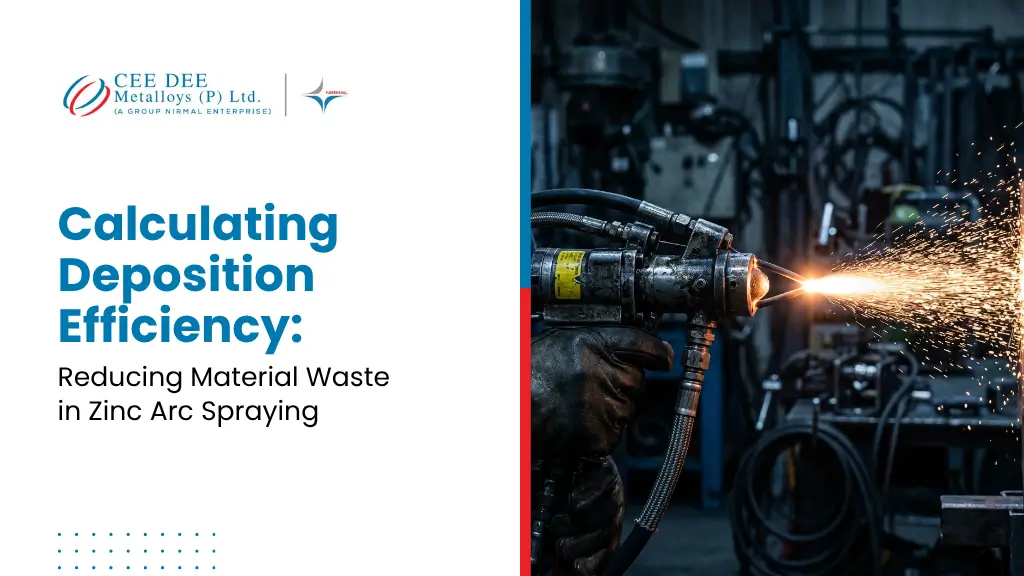
Arc spray is the most widely used method for structural corrosion protection. The zinc metallizing spray machine for arc spray uses two electrically charged zinc wires; the arc generated between them reaches temperatures above 4,000°C, ensuring complete melting of the zinc. The resulting coating is dense, well-bonded, and highly effective even in marine and offshore environments.
Flame Spray Zinc Coating
Flame spray systems are lighter, more portable, and do not require an electrical power supply, making them well suited to remote or field applications. The trade-off is a slightly more porous coating with lower bond strength compared to arc spray. Flame spray is widely used for maintenance coating on existing structures and for smaller surface areas.
📖 Also Read: Zinc Rods Uses in Industrial Coatings
4. Target Applications and Structural Use Cases
Thermal spray zinc coating is specified across a wide range of structural applications where long-term corrosion protection is critical and repainting at intervals is either impractical or prohibitively expensive.
Steel Bridges and Viaducts
Bridge girders, cross-bracing, bearings, and expansion joints are among the most demanding applications for zinc spray coatings. The combination of moisture, traffic-induced mechanical stress, and cyclic temperature changes makes bridges highly vulnerable to corrosion. Thermal spray zinc applied to bridge steel can provide 40 years or more of maintenance-free protection, dramatically reducing whole-life cost.
Transmission Towers and Pylons
Electrical transmission towers and communication pylons are exposed to atmospheric corrosion continuously. Thermal spray zinc is specified for both new construction and the refurbishment of existing towers, particularly in coastal and industrial zones where atmospheric chloride and sulphur dioxide levels are elevated.
Marine and Offshore Structures
Jetties, quay walls, sheet piles, and offshore platform jackets are protected with thermal spray zinc in the splash zone and atmospheric zone. In the submerged zone, zinc spray coatings are often used in combination with impressed current cathodic protection (ICCP) systems for maximum effectiveness.
📖 Also Read: Zinc Aluminium Wires: Metal Protection Benefits
5. Industry Applications of Thermal Spray Zinc Coating
The versatility of thermal spray zinc makes it applicable across virtually every major industry that relies on steel infrastructure. The following sectors represent the highest-volume consumers of zinc spray consumables and equipment.
Oil and Gas Industry
Pipelines, storage tanks, processing vessels, and offshore platforms operate in some of the most corrosive environments imaginable. Thermal spray zinc coatings are specified on above-ground pipeline sections, tank exteriors, structural steelwork on processing platforms, and riser pipes in the splash zone. The long service life of zinc spray coatings is particularly valuable in this sector, where unplanned maintenance shutdowns carry enormous economic penalties.
Shipbuilding and Marine Industry
Ship hulls, ballast tanks, and cargo hold frames are routinely protected with thermal spray zinc in the shipbuilding industry. The applications include both newbuild construction and dry-dock maintenance of existing vessels. Zinc-aluminium alloy spray coatings are increasingly specified for ballast tank interiors, where the combination of alternating wet and dry cycles creates aggressive corrosion conditions.
Power Generation and Renewable Energy
Wind turbine towers, both onshore and offshore, represent a rapidly growing application for thermal spray zinc. The structural steel sections of wind towers are typically zinc-sprayed in the fabrication workshop before erection, providing decades of protection that eliminates the need for re-coating at elevation. Solar mounting structures and hydropower infrastructure are also significant users of zinc metallizing technology.
Source Premium Zinc Wire for Thermal Spray Applications
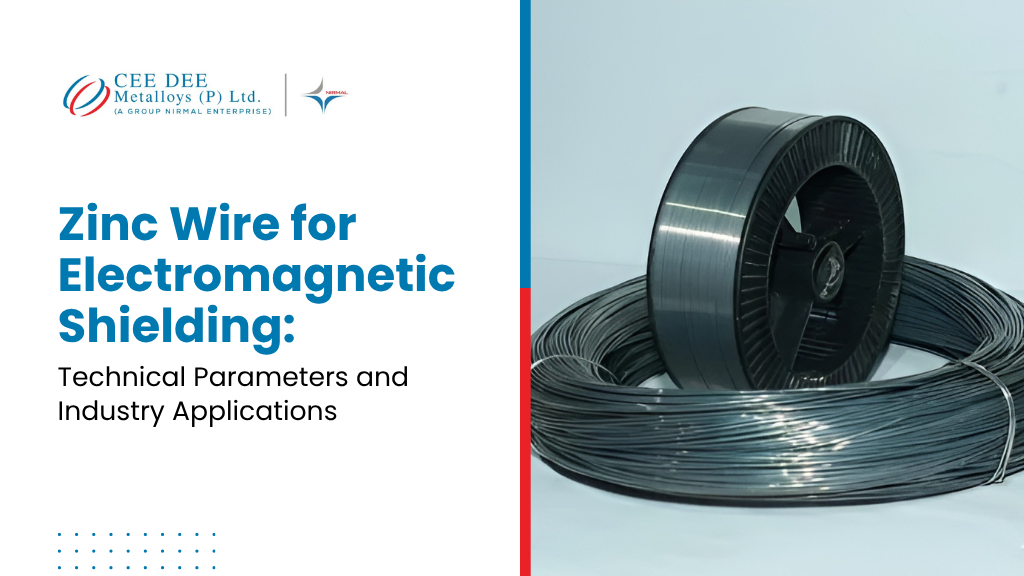
CeeDee Metalloys supplies high-purity zinc wire and zinc-aluminium alloy wire in diameters optimised for arc spray and flame spray systems. Consistent wire chemistry and tight dimensional tolerances ensure reliable coating quality on every project.
Infrastructure and Construction
Structural steelwork in commercial buildings, stadiums, industrial facilities, and transportation hubs is increasingly being protected with thermal spray zinc during fabrication. Architects and engineers specify zinc metallizing on exposed steel elements where the combination of aesthetics and long-term protection is required without the bulk of heavy paint coatings.
6. Commercial and Infrastructure Uses
Beyond heavy industry, thermal spray zinc coating plays an important role in protecting everyday infrastructure assets that communities depend on.
Railway Infrastructure
Railway bridges, signal gantries, overhead line equipment structures, and rolling stock frames are protected with thermal spray zinc in many national railway systems. The specification of zinc spray over conventional painting is driven by the long maintenance intervals required for railway infrastructure, where access for repainting is difficult and costly.
Water and Wastewater Treatment
Steel gates, screens, pipework, and structural steelwork in water treatment plants are exposed to high-humidity environments with chemical contamination. Thermal spray zinc provides a durable barrier that outperforms conventional paint systems in these aggressive conditions. Bio-zinc products are also gaining traction in water-contact applications where biological compatibility is required.
Petrochemical Storage Tanks
Above-ground storage tanks at refineries and petrochemical facilities are major users of zinc spray coatings. External tank surfaces, roof sections, and structural supports are thermally sprayed with zinc to provide long-term protection against atmospheric corrosion, reducing the frequency of expensive tank maintenance shutdowns.
📖 Also Read: Tin Zinc Wires in Industrial Coatings
7. Speciality and Niche Applications
Thermal spray zinc is not limited to large structural applications. Several niche and speciality uses demonstrate the process’s versatility.
Historic Structure Restoration
Many heritage structures including historic iron bridges, wrought iron railings, and ornamental cast iron elements are being preserved using thermal spray zinc. The process allows precise application without the extreme heat of hot-dip galvanizing, which can distort thin or complex sections. The natural grey appearance of zinc spray is also aesthetically sympathetic to many historic materials.
Concrete Reinforcement Protection
Zinc spray applied directly to steel reinforcing bars before casting provides cathodic protection to rebar in new concrete structures, significantly reducing the risk of corrosion-induced concrete spalling over the design life of the structure. This technique is particularly relevant in coastal construction where chloride penetration of concrete is a long-term concern.
Thermal Spray on Concrete Surfaces
Zinc metallizing is also applied directly to concrete bridge decks and marine structures to provide cathodic protection to embedded rebar. The zinc coating acts as an anode, providing galvanic current that suppresses rebar corrosion activity. This technique has been used extensively in North America and Europe as a cost-effective alternative to conventional cathodic protection systems.
8. How to Choose the Right Zinc Coating System
Selecting the most appropriate thermal spray zinc system for a specific project requires consideration of several technical and commercial factors.
Environment and Corrosivity Category
ISO 9223 classifies atmospheric corrosivity into categories C1 (very low) through C5 (very high) and CX (extreme). The corrosivity category of the operating environment is the primary driver of coating thickness specification. Coastal and offshore environments (C4, C5, CX) require thicker zinc deposits and may benefit from zinc-aluminium alloy wire rather than pure zinc wire.
Wire Selection: Pure Zinc vs. Zinc-Aluminium
For standard atmospheric exposure, high-purity zinc wire (99.99% Zn) provides excellent protection at a competitive cost. For aggressive marine, offshore, or industrial chemical environments, zinc-aluminium alloy wire (typically 85% Zn, 15% Al) provides superior corrosion resistance due to the formation of a dense, self-healing aluminium oxide layer within the coating matrix.
Equipment Selection
For shop application to fabricated steelwork, twin-wire arc spray systems offer the highest productivity and coating quality. For field maintenance and repair work, portable flame spray or arc spray equipment is preferred. CeeDee Metalloys offers a range of zinc metallizing spray machines suitable for both workshop and site applications.
Always specify the wire diameter and alloy composition that matches the spray gun manufacturer’s recommendations. Using incorrect wire dimensions can cause feeding problems, inconsistent arc characteristics, and variable coating quality. CeeDee Metalloys can advise on wire selection for specific spray gun models.
9. Performance, Maintenance, and Best Practices
Thermal spray zinc coatings are inherently low-maintenance, but following best practice during application and in-service inspection maximises the return on investment.
Quality Control During Application
Key quality parameters to monitor during application include surface cleanliness (checked by soluble salt testing), surface profile (measured by replica tape), coating thickness (measured by calibrated dry-film thickness gauge at specified frequency), and adhesion (pull-off test per ISO 4624 on witness samples). Keeping records of these measurements provides evidence of compliance with the project specification and forms the basis for warranty claims if coating performance issues arise.
Inspection and Maintenance in Service
Thermally sprayed zinc coatings should be visually inspected at regular intervals, typically annually in severe environments and every three to five years in moderate conditions. Signs of zinc depletion (white zinc corrosion products, known as white rust) indicate that the coating is actively working to protect the steel. Coating thickness measurements at designated survey points allow the remaining service life to be estimated and maintenance planned proactively.
Key Takeaways
- Thermal spray zinc coating provides both barrier and sacrificial galvanic protection to steel substrates.
- Service lives of 30 to 75 years are achievable with correct surface preparation and application technique.
- Arc spray delivers higher coating density and bond strength than flame spray for most structural applications.
- Zinc-aluminium alloy wire is preferred for marine, offshore, and high-corrosivity environments.
- Proper surface preparation to Sa 2.5 or Sa 3 is the most critical factor in long-term coating performance.
- Portable equipment from CeeDee Metalloys enables cost-effective field application and maintenance coating.
- Regular inspection and thickness monitoring allow proactive maintenance planning and maximise asset life.
10. CeeDee Metalloys Serves Customers Across India
CeeDee Metalloys supplies zinc wire, zinc-aluminium alloy wire, tin-zinc wire, and metallizing equipment to corrosion protection contractors, steel fabricators, and industrial maintenance teams across India. Our distribution network covers all major industrial regions, ensuring timely supply of consumables to project sites nationwide.
Zinc Wire Suppliers – North India
Zinc Wire Suppliers – East and West India
Zinc Metallizing Spray Machine Suppliers
11. Related Reading
Articles
12. Frequently Asked Questions
What is thermal spray zinc coating?
Thermal spray zinc coating is a surface treatment process in which zinc wire is melted and propelled onto a substrate using compressed air or flame, forming a dense, adherent metallic layer that protects steel and concrete from corrosion.
How long does thermal spray zinc coating last?
When applied correctly to properly prepared surfaces, thermal spray zinc coatings can provide corrosion protection for 30 to 75 years in mild environments and 15 to 40 years in aggressive marine or industrial conditions.
What is the difference between arc spray and flame spray zinc coating?
Arc spray uses an electric arc to melt two zinc wires simultaneously, producing a higher-velocity, denser coating. Flame spray uses a combustion flame to melt zinc wire or powder. Arc spray generally delivers better coating density and bond strength.
What surface preparation is required before thermal spray zinc coating?
The substrate must be blast-cleaned to Sa 2.5 or Sa 3 standard according to ISO 8501-1, achieving a surface roughness profile of 50 to 100 micrometres (Rz). Any contamination, mill scale, rust, or old coatings must be completely removed.
Can thermal spray zinc coating be applied on-site to existing structures?
Yes. Portable zinc metallizing spray machines allow on-site application to bridges, pipelines, tanks, and other structures without the need for dismantling. CeeDee Metalloys supplies metallizing spray machines suitable for both shop and field use.
What thickness is recommended for thermal spray zinc coating?
For structural steel in mild environments, 80 to 150 micrometres is typical. For marine or offshore applications, 200 to 300 micrometres or more is recommended. Thickness is measured using a calibrated dry-film thickness gauge.
Is thermal spray zinc coating better than hot-dip galvanizing?
Both methods provide galvanic protection. Thermal spraying offers the advantage of on-site application to large or complex structures, no size limitations, and the ability to repair damaged coatings. Hot-dip galvanizing provides a metallurgically bonded coating but requires immersion in molten zinc and is limited by tank dimensions.
Which zinc wire grades are used for thermal spray coating?
High-purity zinc wire (99.99% Zn) is most commonly used. Zinc-aluminium alloy wires such as Zn-15Al provide enhanced corrosion resistance, especially in marine environments. CeeDee Metalloys supplies both grades for thermal spray applications.